
 Gas fireplace service
 Sweep & inspection
 Caps & crowns
 Flue relining
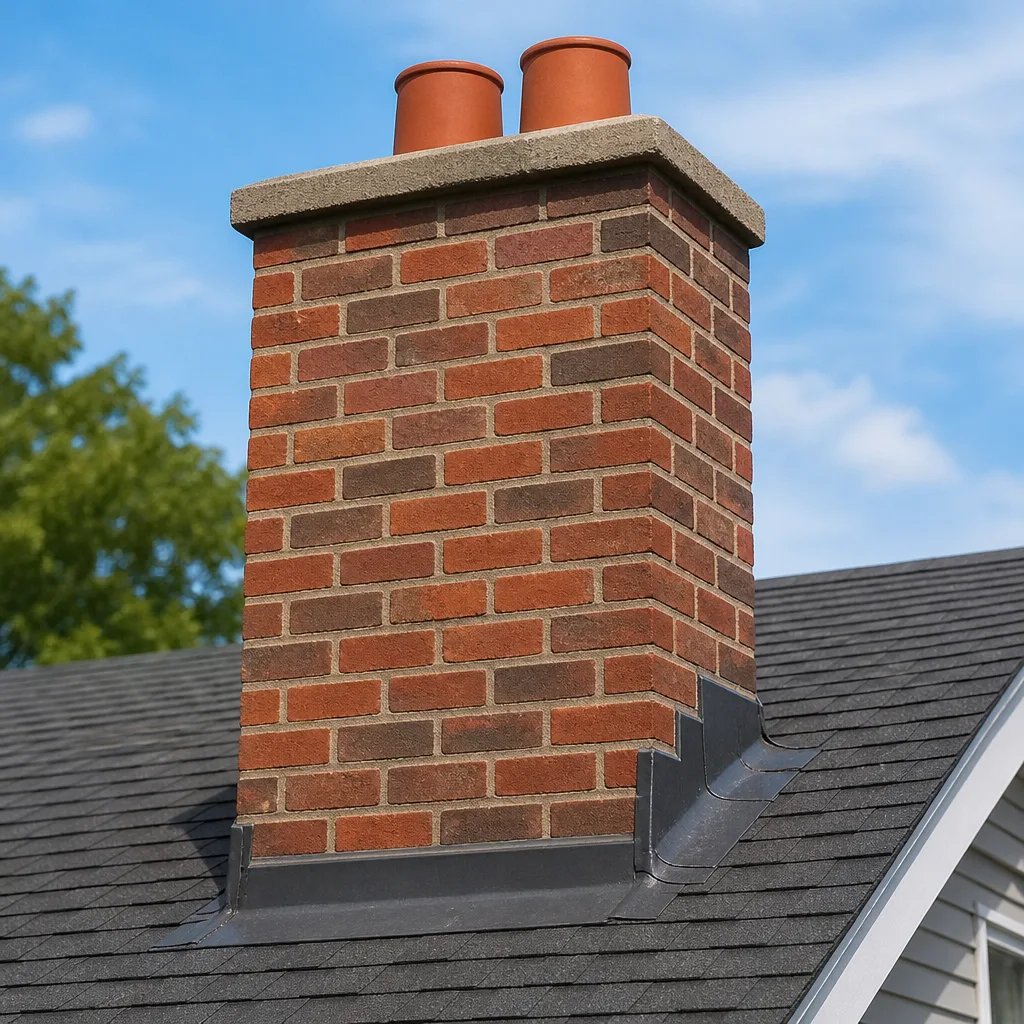 Masonry repair
Level 1 sweep and inspection to the NFPA 211 annual standard - flue, crown, cap, and flashing checked and photographed
Chimney sweep logs do not sweep chimneys. They loosen some creosote - which then falls where a brush and vacuum still have to collect it.
HeatShield Chimney Cleaning Service in Sylmar, CA
Chimney Sweep Sylmar provides independent HeatShield service in Sylmar, including chimney cleaning, inspection, and repair across the northeast San Fernando Valley. We service and maintain HeatShield Cerfractory flue linings, resurfacing systems, and crown repair products without manufacturer authorization, which means we evaluate your flue on its actual condition rather than a corporate checklist. Sam Griffin and our crew have worked on hundreds of HeatShield-lined chimneys in Sylmar’s older ranch homes, and we know exactly how this cast-in-place ceramic material behaves after years of valley heat, winter cold snaps, and the occasional seismic shift. Call (833) 620-0634 for a HeatShield-specific inspection and quote.
Why Sylmar Homeowners Choose HeatShield Chimney Cleaning
HeatShield Cerfractory flue lining is a cast-in-place ceramic material that resurfaces aging clay tile flues from the inside, restoring a smooth, insulated, fire-resistant passage without tearing down the chimney. In Sylmar, where most homes are 1950s to 1970s single-story ranch builds with original masonry fireplaces, HeatShield has become a common retrofit because the alternative, a full tear-out and rebuild, is dramatically more invasive and expensive on older stucco-and-clay-tile houses. Our job as an independent HeatShield repair in San Fernando and Sylmar provider is to keep that lining clean, inspect it for the specific failure modes this climate produces, and repair what we find before it becomes a structural problem. The work differs from a standard sweep because a HeatShield-lined flue is not the same surface as bare clay tile, and we treat it accordingly.
Sylmar’s older ranch homes often sit on clay-tile roofs that crack when walked on, so we bring roof-protection pads and long-reach equipment to every job, whether we’re sweeping a HeatShield-lined flue or sealing a crown. That local reality rarely comes up in newer tract neighborhoods like Santa Clarita, but it’s standard practice for us. If you own a Sylmar home with a HeatShield liner and you’ve been putting off service because you’re not sure who actually knows how to work on this material, you’ve found the right crew.
Key Takeaways:
- HeatShield linings need a different inspection approach than bare clay tile flues; we check for debonding, spalling, and glaze buildup at high-stress transitions.
- Sylmar’s hot-dry summers and near-freezing winter nights accelerate crown cracking, which directly affects HeatShield lining longevity.
- We’re an independent provider, not a HeatShield-authorized dealer, so our recommendations are based on your chimney’s actual condition.
- One visit can cover HeatShield cleaning, crown sealing, and a Level 2 camera inspection.
Styles & brands we work with
- Sweep & inspection
- Caps & crowns
- Flue relining
- Masonry repair
- Gas fireplace service
Why Trust Chimney Sweep Sylmar for Your HeatShield Chimney Cleaning?
HeatShield is a specific product with specific requirements. Its Cerfractory lining cures to a particular thickness and density, and sweeping it with the wrong brush or technique can scour the surface or leave glazed creosote behind. We use rotary poly brushes sized to the flue dimensions on HeatShield-lined chimneys, and we inspect the lining with a camera before and after every sweep. Sam grew up in Sylmar’s Olive View neighborhood and studied heating systems and venting at Los Angeles Mission College before spending nearly two decades working chimneys across the northeast San Fernando Valley, including Pacoima. He’s seen enough HeatShield linings to know when the ceramic is still sound and when it’s delaminating from the original clay tile behind it.
We follow HeatShield’s published cure and thickness specifications when any patching or re-cast work is needed, and we use HeatShield-approved ceramic materials for repairs. That’s not because the manufacturer requires us to, but because we’ve learned from experience that substituting generic mortar or refractory cement on a cast ceramic lining creates a weak bond that cracks within a season or two. Our independence from HeatShield means we can also tell you when a lining is still fine and just needs a thorough sweep, even if that means we make less money than if we talked you into a re-line. A clean flue isn’t a luxury – it’s just the job done right.
Common HeatShield Chimney Cleaning Problems We Fix in Sylmar
HeatShield linings hold up well when installed correctly, but Sylmar’s conditions expose predictable weak points. Here are the five issues we see most often on HeatShield-lined chimneys in this part of the Valley:
- Cracking or spalling at the first flue tile transition. The Cerfractory lining is thinnest where it meets the original clay tile at the top of the chimney, and that transition takes the brunt of heat stress during every fire. After years of expansion and contraction in Sylmar’s wide temperature swings, hairline cracks form there. Those cracks let moisture behind the ceramic, which slowly separates it from the clay tile underneath. We catch this early with a camera inspection and patch the affected area before it spreads.
- Debonding from the original clay tile, creating hidden voids. A HeatShield lining that looks smooth from the firebox can still be separated from the clay tile behind it. The void fills with creosote and moisture, which creates a fire hazard you cannot see from below. We check for debonding by tapping along the flue walls and running a camera up the full length, looking for the telltale shadow lines where the ceramic has pulled away.
- Stage-three glazed creosote buildup on older HeatShield surfaces. HeatShield’s ceramic surface is smooth when new, but after years of hot fires and incomplete combustion, it can develop microscopic pitting that grabs creosote and holds it. Once creosote glazes, a standard wire brush won’t remove it. We use rotary poly brushes and, when needed, chemical glazed-creosote removers to strip it back to the ceramic surface without damaging the lining.
- Water intrusion through failed crown or flashing that saturates the ceramic. Sylmar’s clay-tile roofs and older masonry crowns crack under UV and thermal stress. Water gets in, soaks the HeatShield lining from the outside, and causes the ceramic to spall and flake. This is the most common root cause of premature HeatShield failure we see in Sylmar. The fix is sealing the crown and flashing first, then addressing any ceramic damage.
- Surface roughness at the smoke shelf that traps soot and accelerates buildup. The smoke shelf is a ledge of masonry just above the firebox, and HeatShield does not always cover this area unless the installer specifically resurfaced it. When the smoke shelf is rough or pitted, it catches soot that re-enters the home as smoke odor on hot days. We clean this area thoroughly during every HeatShield service, because a lining can be perfect while the shelf underneath it is the actual source of the problem.
One recent job in a 1960s Sylmar ranch house comes to mind. Smoke was rolling out of the firebox on start-up, and the homeowner assumed the HeatShield lining had failed. Our tech ran a Level 2 inspection and found the Cerfractory intact, but the top of the flue was heavily glazed with stage-three creosote, and the crown had a hairline crack letting water in. We swept with rotary poly brushes, removed the glazed creosote, and sealed the crown with a flexible coating. The draw returned to normal, and the homeowner avoided a full re-line. That’s the difference a proper diagnosis makes.
HeatShield Parts & Our Repair-vs-Replace Approach
When HeatShield work requires materials, we use HeatShield-approved ceramic lining mix for any patching or re-cast work, and quality aftermarket stainless components for caps, dampers, and chase covers. The ceramic side matters because the lining’s fire resistance and cure profile depend on mixing it to the manufacturer’s specified thickness. The stainless side matters less, because a properly selected aftermarket cap or damper from a manufacturer like Famco or Copperfield functions just as well as the OEM part at a fairer price. We stock common cap sizes, damper kits, and repair materials in our Sylmar service truck, which means we can complete most HeatShield repairs in a single visit rather than coming back a week later.
Our repair-versus-replace standard is simple: we will always tell you if a HeatShield lining can be cleaned and patched rather than re-lined. A sound cast lining often outlasts the chimney around it, and re-lining a chimney that just needs targeted repair is wasted money. But if the ceramic has debonded over more than a third of the flue length, or cracks run through the full lining thickness in multiple locations, we’ll show you the camera footage and explain why re-lining is the safer call. You see what we see before you spend a dollar. Call (833) 620-0634 to schedule that inspection.
Our HeatShield Service Process – Step by Step
Every HeatShield service in Sylmar follows the same sequence, so you know exactly what’s happening and why.
- 1
Full inspection before any brushing. We run a Level 2 camera inspection up the full flue length, checking the Cerfractory surface for cracks, spalling, debonding, and glaze buildup. We also check the crown, flashing, and smoke shelf. You see the footage before we touch a brush.
- 2
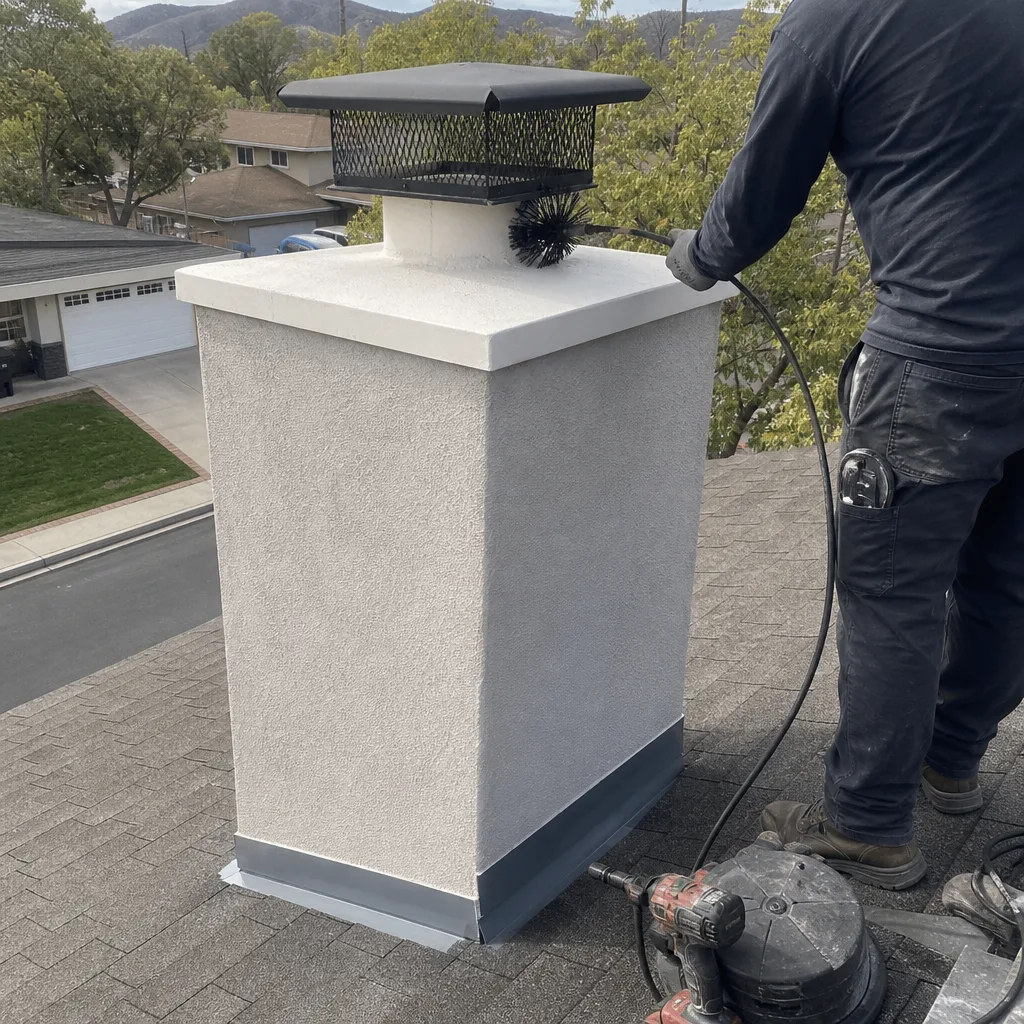
Targeted sweep with brushes sized to your liner. HeatShield-lined flues get rotary poly brushes, not aggressive wire. We size the brush to your flue’s exact diameter and condition, and we work from the roof with pad protection or from the firebox with long-reach tools, depending on your roof type and access point.
- 3
Patch or re-cast any damaged ceramic sections. If the inspection found localized ceramic damage, we repair it with HeatShield-approved mix applied to the manufacturer’s cure and thickness specs. We do not spot-patch with generic cement.
- 4
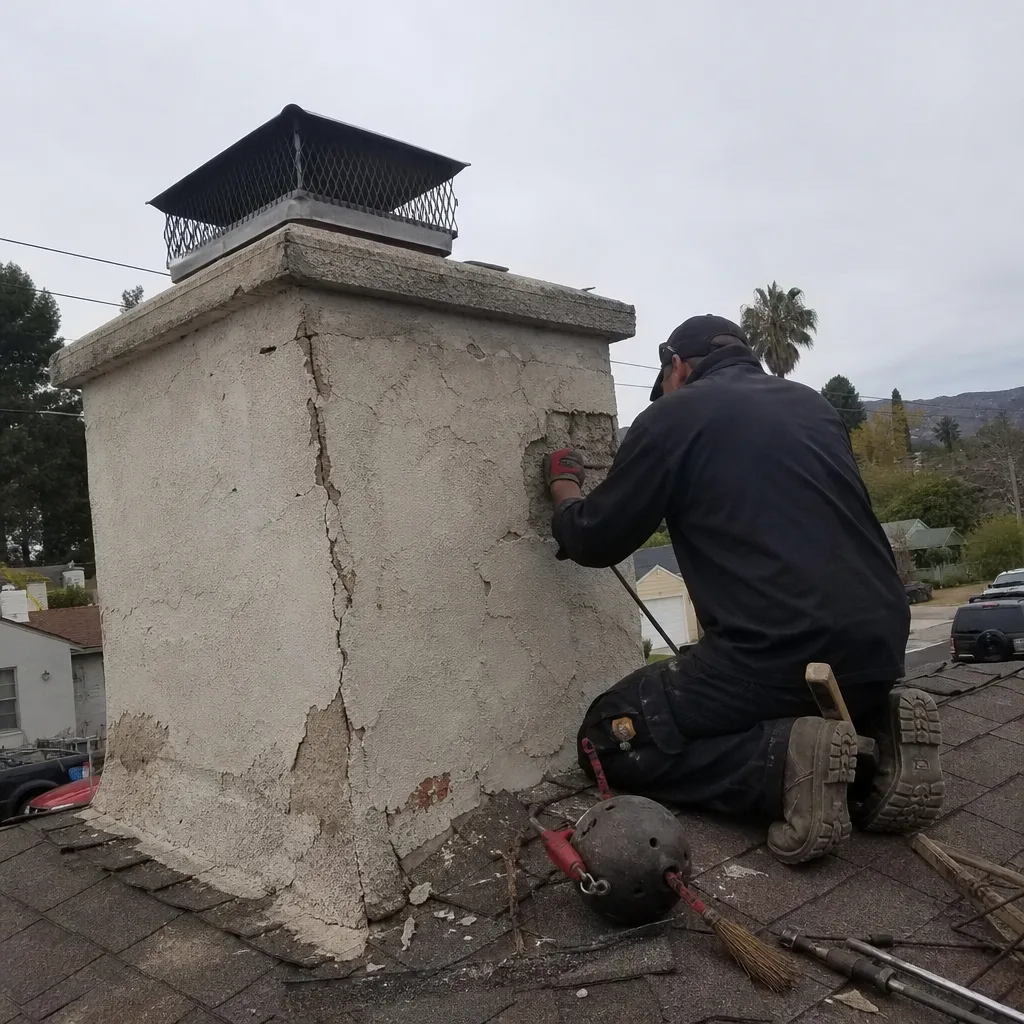
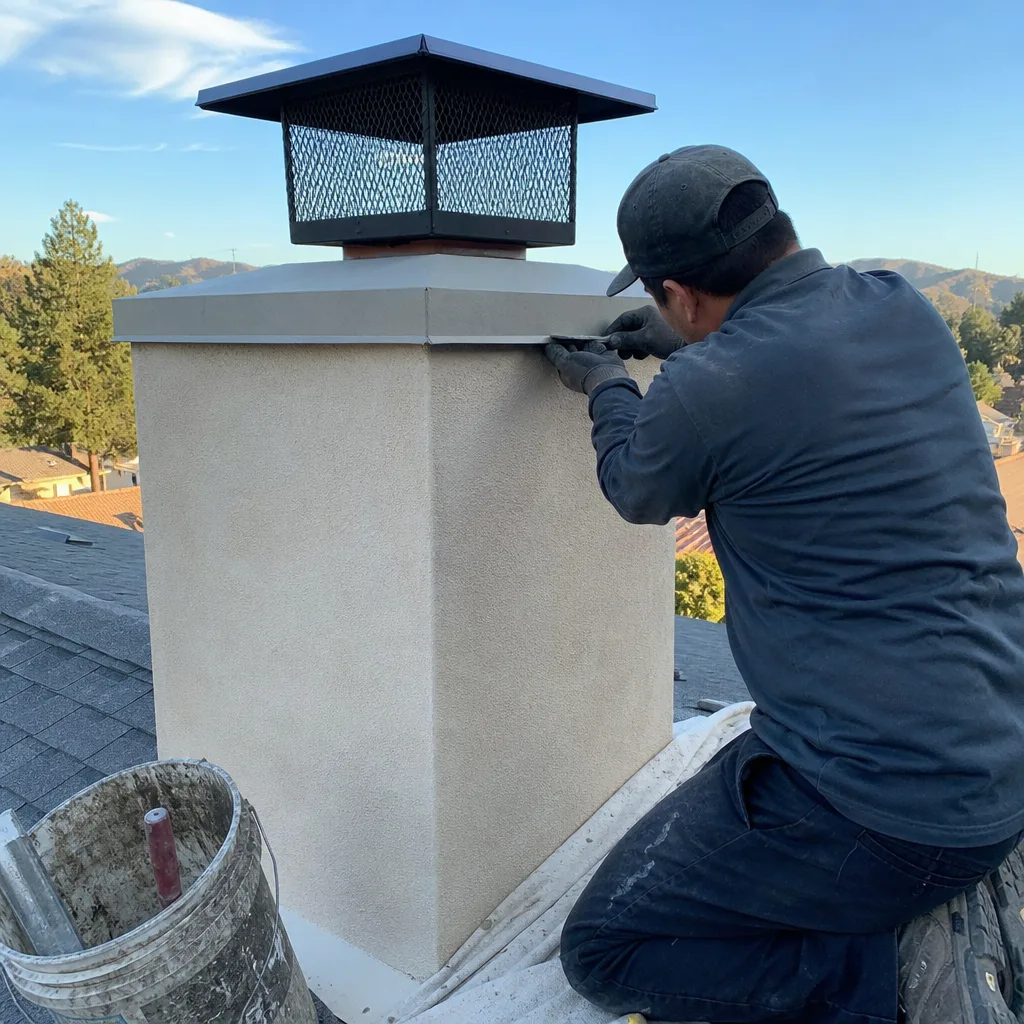
Crown and flashing repair where needed. A HeatShield lining is only as good as the water protection above it. If your crown is cracked or your flashing is lifted, we seal it with a flexible crown coating or replace the flashing to stop water from saturating the ceramic.
- 5
Post-service camera verification and smoke test. After the sweep and any repairs, we run the camera again to confirm the flue is clean and the repair bond is solid, then do a smoke test to verify draft. You get a written report and the footage for your records.
See the difference
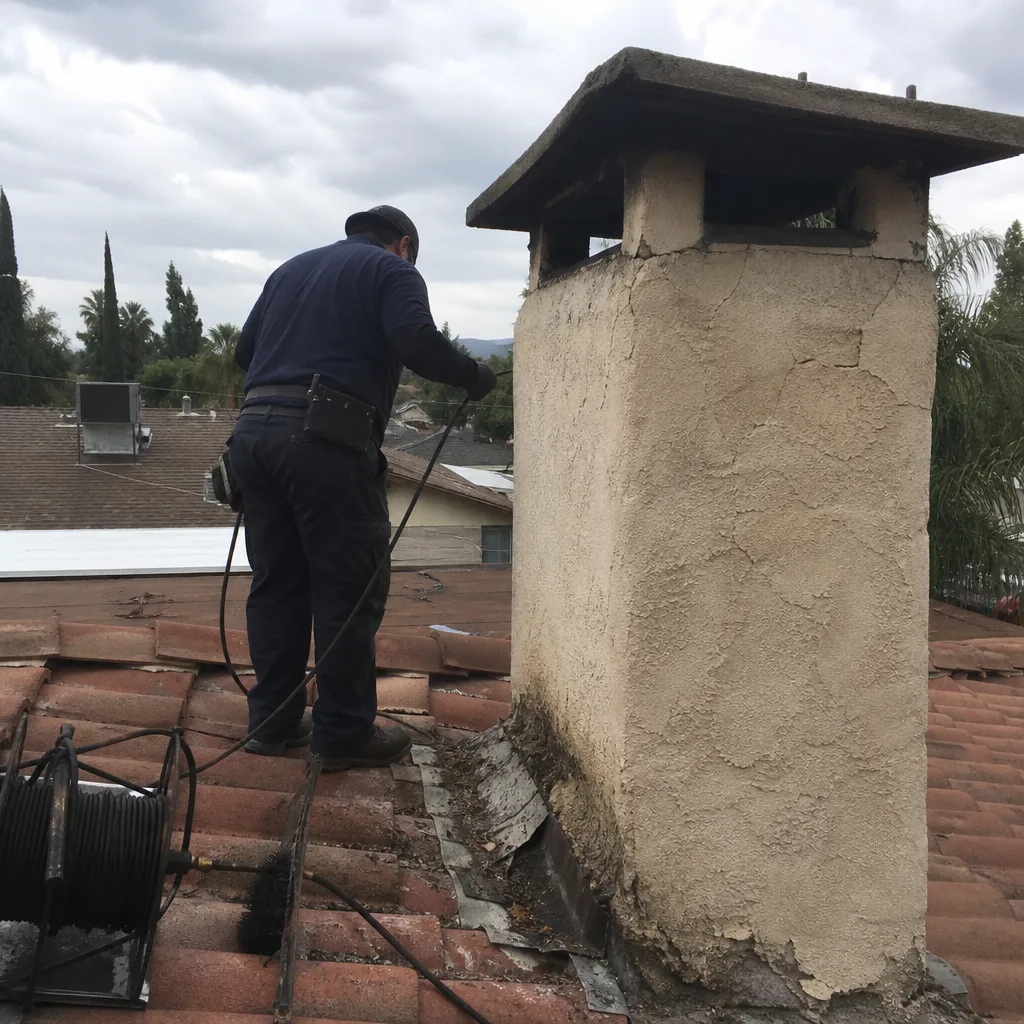 Before
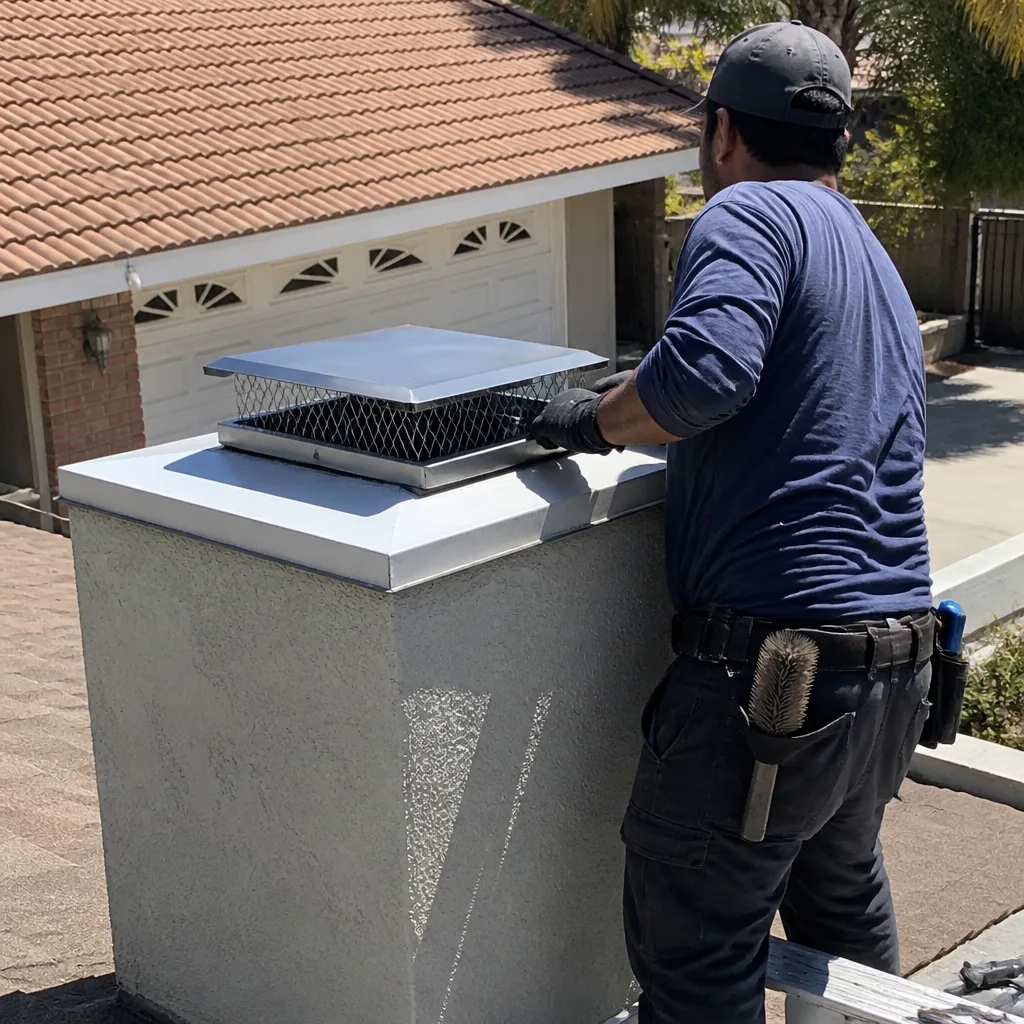 After
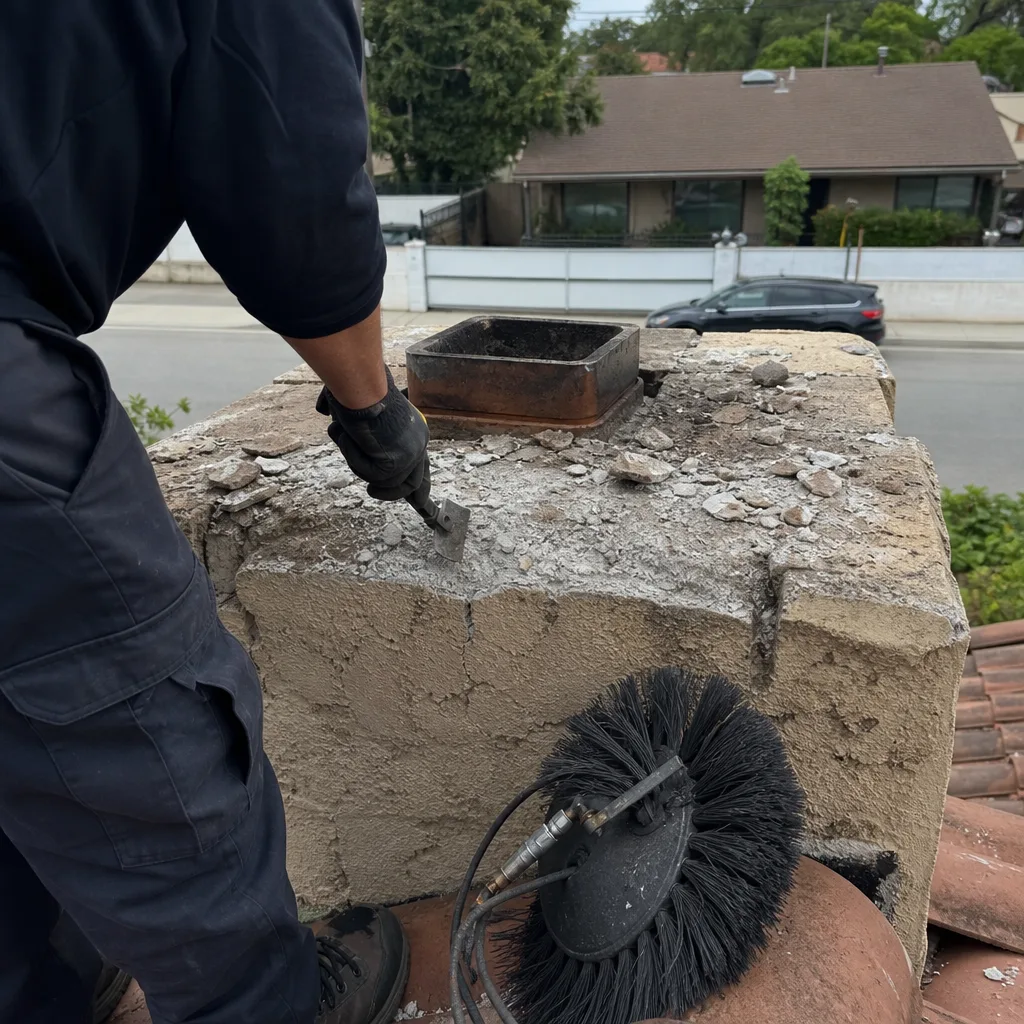 Before
 After
 Before
 After
HeatShield Products We Service & Install in Sylmar
We service and maintain the full HeatShield product range across Sylmar, Mission Hills HeatShield service, and the surrounding San Fernando Valley. That includes the HeatShield Cerfractory Flue Lining, the cast-in-place ceramic system used to resurface deteriorating masonry chimneys; the HeatShield Resurfacing System for existing clay tile flues, which restores a smooth interior without demolition; and HeatShield chimney crown repair and waterproofing products, which address the water intrusion that undermines linings from above. We stock common repair materials on our truck for fast turnaround and can order specialized HeatShield components when a job needs them. Whether your Sylmar home has a 1960s masonry chimney with a HeatShield retrofit or a newer install, we know how to inspect it, clean it, and repair it properly.
We Also Service These Brands
HeatShield is one part of our workload, not our entire business. We also work with DuraFlex flexible liner systems for full relining jobs and Gelco chimney products for crown repair and waterproofing, along with Olympia Chimney, Famco, and Copperfield components for caps, dampers, and venting. That multi-brand capability matters because it means we recommend the right product for your chimney, not the only product we happen to sell. When a HeatShield lining is still serviceable but your crown is shot, we’ll tell you that directly.
FAQs – HeatShield Chimney Cleaning Service in Sylmar
The only reliable way to know is a Level 2 camera inspection, because a HeatShield lining can look fine from the firebox while it’s debonded or cracked higher up the flue. Common warning signs include smoke rolling into the room on start-up, a persistent smoky smell on hot days, visible water stains on the interior chimney wall, or bits of ceramic material falling into the firebox. If you’re seeing any of those in your Sylmar home, we’ll inspect and show you the footage so you know exactly what’s going on inside your flue. Call (833) 620-0634 to schedule that inspection.
Yes, in both directions depending on how often you burn. A properly installed HeatShield lining is smooth, so it accumulates creosote slower than rough clay tile, but when creosote does form, it can glaze faster on the ceramic surface if you burn unseasoned wood or restrict airflow. We recommend a sweep after every 50 to 60 fires, or once a year for regular seasonal use, same as a standard flue. In Sylmar’s dry climate, creosote buildup is less about moisture and more about the type of wood and how hot you run your fires.
Yes, when the right equipment is used. We sweep HeatShield-lined flues with rotary poly brushes sized to the flue diameter, not wire brushes that can scour the ceramic surface. We also avoid aggressive chemical treatments unless glazed creosote specifically requires them, because the wrong solvent can degrade the ceramic bond. This is one reason we recommend a technician who actually knows HeatShield rather than a general handyman with a brush.
Hot-day smoke smells usually come from creosote and soot trapped on the smoke shelf or in the upper flue, not from the HeatShield lining itself. When the Valley heat bakes the chimney, that buildup off-gasses and pushes odors back down into the house. The fix is a thorough sweep that includes the smoke shelf area and the full flue length, plus a check of the chimney cap and damper to make sure they’re functioning and not sealing in moisture. If the smell persists after a proper sweep, the next step is checking for debonding voids that are holding creosote behind the ceramic.
No. HeatShield manufactures the lining products, but they do not approve or authorize independent chimney repairs. Chimney Sweep Sylmar is an independent service provider, not a HeatShield-authorized dealer, which means we evaluate your flue honestly and recommend repairs based on its actual condition, not on a manufacturer’s warranty requirements. We follow HeatShield’s published installation and repair specifications because they work, but our recommendations come from what we see in your chimney.
A standard HeatShield chimney sweep in Sylmar typically runs between $180 and $300 depending on flue height, roof access, and how much glazed creosote needs removal. A Level 2 camera inspection adds $100 to $200. Crown sealing, ceramic patching, or re-cast work is quoted separately after we see the damage. Call (833) 620-0634 for an exact quote – estimates are free, and Sam will walk you through what your chimney actually needs.
Book Your HeatShield Service in Sylmar, CA
If your Sylmar home has a HeatShield liner, or you’re not sure what’s inside your flue, we’ll inspect it, show you the footage, and recommend only what’s necessary. Call (833) 620-0634 to book a HeatShield chimney cleaning, Level 2 inspection, or crown repair. We serve all of Sylmar, from Olive View to the foothills, and we show up with roof pads, the right brushes, and the experience to do the job without damaging your roof or your liner.
Written by Sam Griffin, Owner at Chimney Sweep Sylmar, serving Sylmar and the northeast San Fernando Valley with HeatShield-specific chimney service.