
Last updated November 2, 2026
 Sweep & inspection
 Caps & crowns
 Flue relining
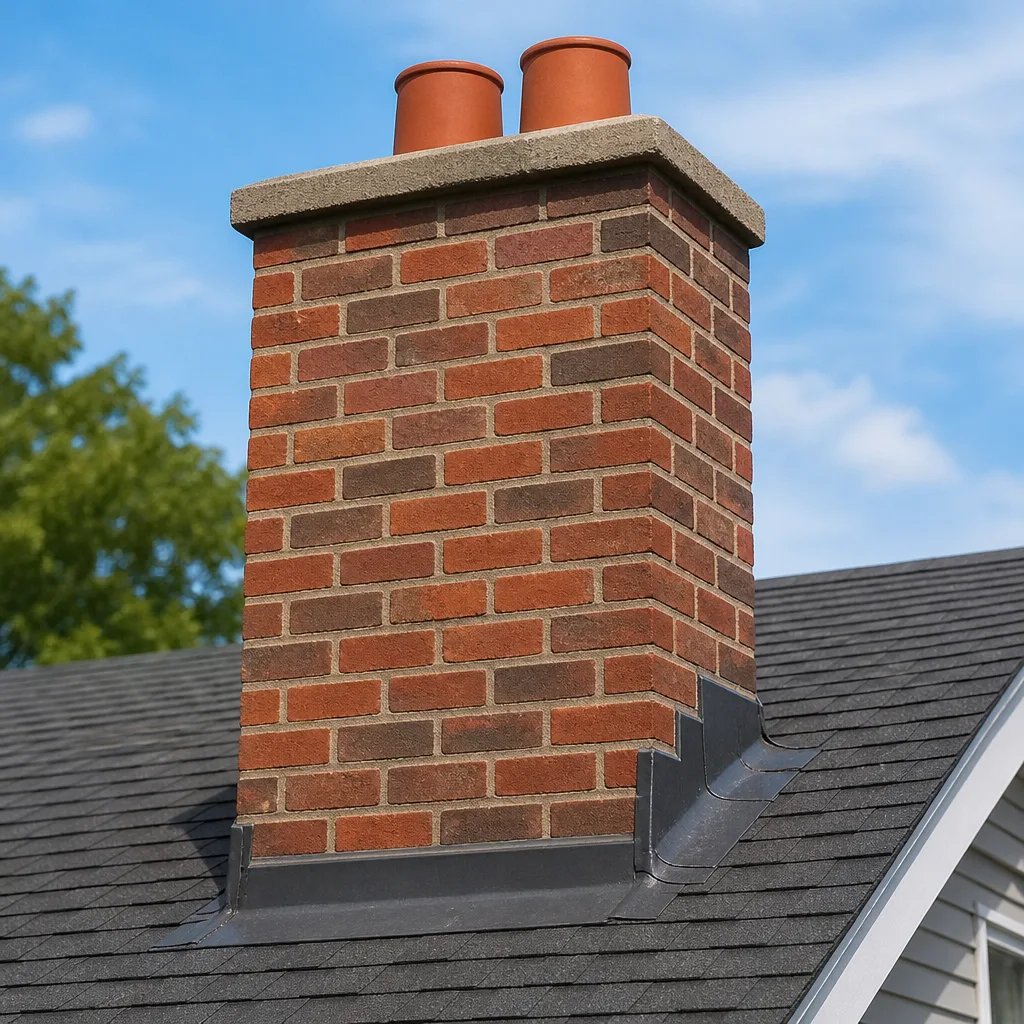 Masonry repair
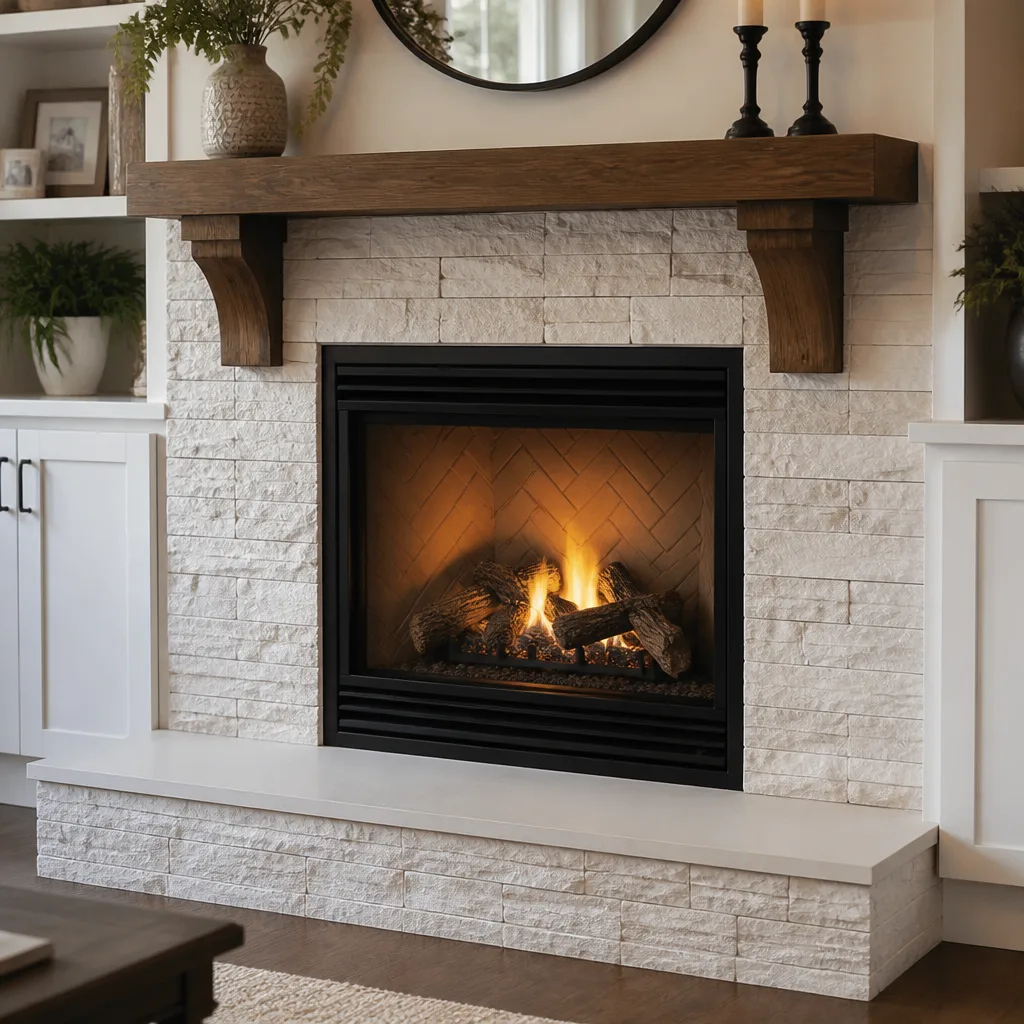 Gas fireplace service
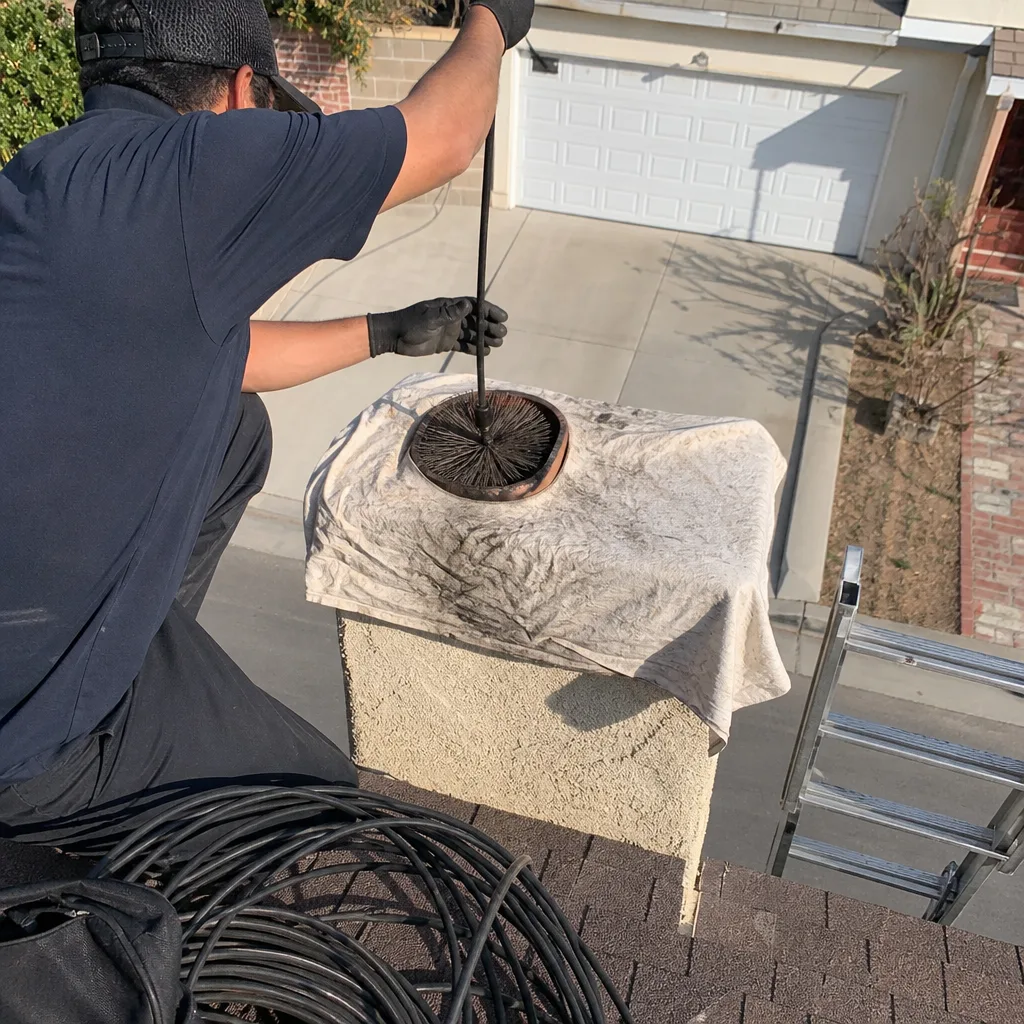
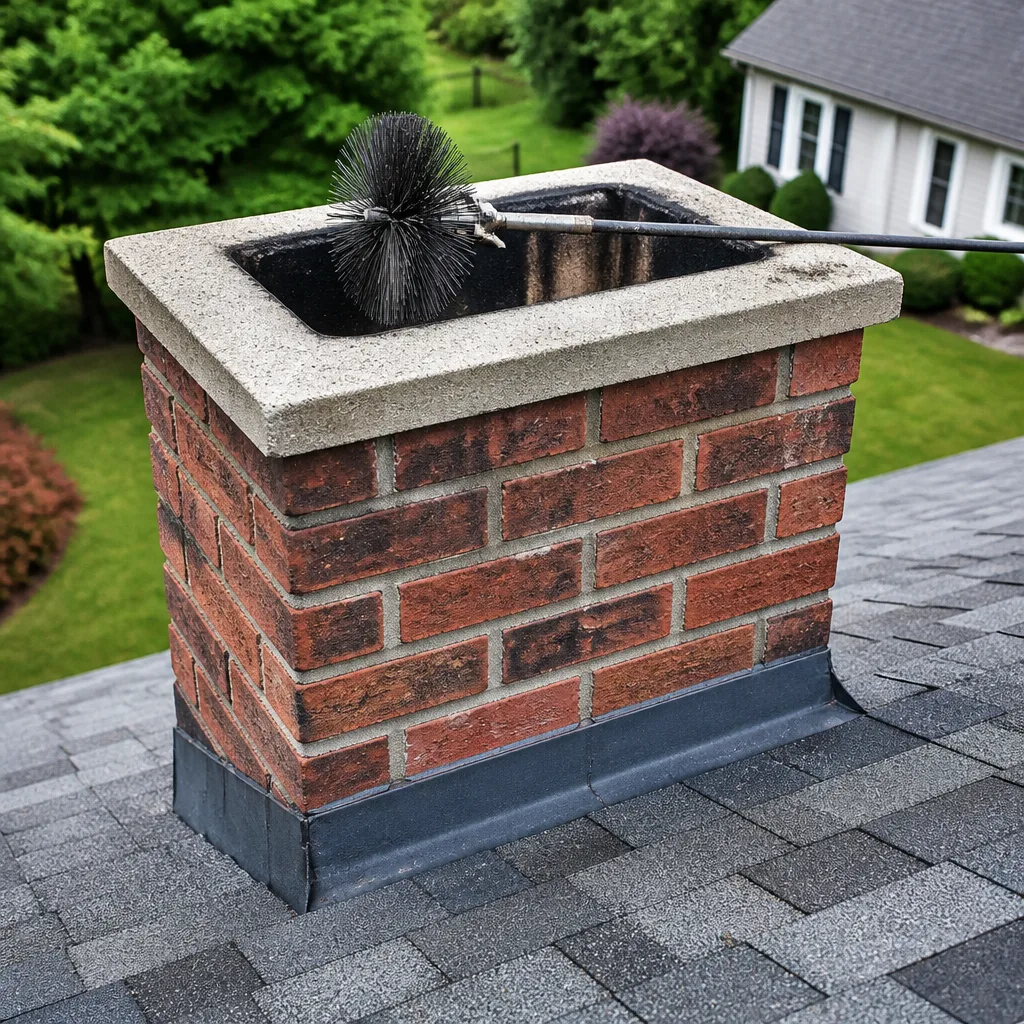
Level 1 sweep and inspection to the NFPA 211 annual standard - flue, crown, cap, and flashing checked and photographed
Chimney sweep logs do not sweep chimneys. They loosen some creosote - which then falls where a brush and vacuum still have to collect it.
Chimney Cleaning Warning Signs: A Sylmar Homeowner’s Reference Guide
Here’s a scenario we see often in Sylmar: a homeowner notices a faint smoky smell in the living room on a windy evening, shrugs it off as normal for an older fireplace, and goes to bed. Six months later, a level-two inspection reveals creosote glazing thick enough to ignite, a cracked flue tile, and a rain cap hanging by one bracket. None of that happened overnight. The chimney had been signaling distress for months, and every signal was dismissed as cosmetic, normal, or “something to check next year.” This guide decodes those signals. You’ll learn what each warning sign actually indicates, which component is failing, whether you can keep burning or need to stop immediately, and how to document what you’re seeing before you call a chimney sweep in Sylmar.
Styles & brands we work with
- Sweep & inspection
- Caps & crowns
- Flue relining
- Masonry repair
- Gas fireplace service
Quick Answer
The most common chimney warning signs in Sylmar are smoke backdrafting into the room, a strong odor when the fireplace isn’t in use, white staining (efflorescence) on exterior brick, crumbling mortar joints, visible cracks or gaps in the flue, and heavy soot or creosote buildup in the firebox. Each sign maps to a specific component: backdraft points to drafting or obstruction problems, odor points to creosote accumulation or moisture, efflorescence points to water intrusion, and crumbling mortar points to deteriorating masonry. If you see backdrafting, a strong odor, or visible structural gaps, stop using the fireplace and schedule an inspection. For a full breakdown of what to check and when, see our Chimney Sweep Maintenance Checklist for Sylmar Homeowners. If you see efflorescence or minor mortar wear, you can often continue using the fireplace with monitoring while you plan a repair.
Table of Contents
- Smoke Backdrafting Into the Room
- Chimney Odor When the Fireplace Is Cold
- White Staining on Exterior Brick (Efflorescence)
- Crumbling Mortar and Spalling Brick
- Creosote Buildup You Can See or Feel
- Damaged or Missing Chimney Cap
- Unusual Sounds: Wind, Animals, and Dripping
- Common Mistakes to Avoid
- When to Call a Professional
- Frequently Asked Questions
Smoke Backdrafting Into the Room
Smoke rolling back into your living room is the most alarming chimney warning sign, and for good reason: it means the flue isn’t pulling combustion gases up and out the way it should. In a properly functioning chimney, the hot gases rise through the flue and exit above your roofline, creating negative pressure that pulls fresh air into the firebox. When that draft fails, smoke follows the path of least resistance, which is straight into your home.
Backdrafting isn’t one problem. It’s a symptom with several possible causes, and each cause points to a different component:
- Cold chimney syndrome: If the flue is cold, the air inside is dense and heavy. When you light a fire, the smoke can’t push through that cold plug of air, especially on a chilly Sylmar morning after a cold night. This is often misread as a serious problem when the fix is simply pre-warming the flue with a rolled newspaper torch held near the damper for 30 to 60 seconds before lighting the main fire.
- Damper issues: A damper that’s partially closed, warped, or rusted in the wrong position restricts the flue opening. This reduces draft velocity and sends smoke sideways into the room. A damper that won’t fully open is a mechanical problem worth fixing, not working around.
- Obstruction in the flue: Bird nests, squirrel debris, leaf litter, or a dislodged section of flue tile can partially or fully block the exhaust path. In Sylmar, we see nests from house sparrows and starlings as a recurring issue, especially in chimneys without a properly fitted cap.
- Chimney height or pressure issues: A flue that terminates too close to the roofline or sits in a negative-pressure zone of your house can fail to draft when interior appliances compete for air. Tightly sealed homes with kitchen exhaust fans or bathroom fans running can starve the fireplace of combustion air.
- Cracked flue liner: A damaged liner allows smoke and hot gases to escape into the chimney cavity instead of rising cleanly through the flue. This is the most serious cause of backdrafting, because it also means gases may be entering wall cavities or living spaces through paths you can’t see.
Here’s the diagnostic sequence we follow when a Sylmar homeowner reports backdrafting. Walk through these in order before assuming the worst:
- Open the damper fully and verify it’s not obstructed by debris or rust.
- Pre-warm the flue with a newspaper torch.
- Turn off competing exhaust fans (kitchen hood, bathroom vents, whole-house fan) and crack a window near the fireplace to equalize pressure.
- If smoke still backs into the room, the issue is structural: an obstruction, a liner problem, or a drafting defect that needs professional diagnosis.
One point we can’t overstate: backdrafting is a carbon monoxide risk. If you have a smoke backdraft problem that isn’t resolved by pre-warming and pressure equalization, treat it as a stop-use situation until a pro has inspected the flue. Carbon monoxide from an improperly drafting fireplace accumulates silently, and the symptoms of low-level exposure, headache, fatigue, nausea, are easy to write off as something else.
Chimney Odor When the Fireplace Is Cold
A cold fireplace that smells like a campfire, or worse, like something damp and acrid, is one of the most commonly misdiagnosed chimney warning signs. The odor isn’t the problem. It’s the messenger, and what it’s telling you depends on the quality of the smell, when it appears, and where it’s strongest.
Here’s what different odors actually indicate:
- Smoky or sooty smell on humid or rainy days: This is creosote plus moisture. Creosote is hygroscopic, meaning it absorbs water from the air. When humidity rises, the creosote swells and releases a sharp, smoky odor that travels down the flue and into the room. The fix is a thorough sweeping to remove the creosote deposits, not an air freshener.
- Sharp, acrid smell year-round, stronger in summer: This points to significant creosote accumulation in the flue, often stage-two or stage-three creosote (the shiny, tar-like glaze). At this concentration, the creosote itself is off-gassing volatile compounds, and it’s a fire risk. This is the smell of a chimney that hasn’t been swept in years.
- Musty, moldy, or damp-earth smell: Water is getting into the flue or the chimney cavity. The source is usually a failed chimney cap, cracked crown, or damaged flashing. Moisture plus creosote creates an especially foul odor, and moisture alone can cause liner deterioration and masonry damage.
- Animal smell, like a nest or deceased rodent: Something has taken up residence, usually in the flue or at the smoke shelf. Bird nests, squirrel droppings, and animal remains all produce distinct odors. The fix is removal, followed by installing a proper cap with a spark arrestor to prevent re-entry.
A critical distinction: odor from creosote or moisture is a warning sign. Odor from pyrolysis is a different category altogether. Pyrolysis occurs when wood framing adjacent to the chimney is repeatedly heated by hot flue gases, lowering its ignition temperature over time. A smell that’s hard to describe, something like roasting wood but without a fire, coming from the wall or ceiling near the chimney, warrants immediate professional evaluation. We’d rather send a camera up and find nothing than have a homeowner wait on a smell that turns out to be degraded framing behind drywall. In a hot, dry Sylmar season, that’s a fire you don’t want to meet.
White Staining on Exterior Brick (Efflorescence)
A white, chalky film streaking down the outside of your chimney isn’t salt residue from the air. It’s efflorescence, and it’s a surface-level symptom of a deeper problem: water is moving through your masonry. Here’s the mechanism. Water infiltrates the brick or mortar through capillary action, dissolves the natural salts present in the masonry, and carries them to the surface. When the water evaporates, the salts are left behind as a white crystalline deposit.
By the time efflorescence is visible on the outside of a chimney in Sylmar, the interior has usually been wet for months. That’s the part most people miss. The stain is cosmetic, but the moisture that causes it is structural. It’s eroding mortar joints from the inside, saturating the flue liner, and accelerating the freeze-thaw cycle that cracks brick faces over time.
What efflorescence tells you about your chimney:
- Water is entering somewhere, and the entry point is probably not where the stain is darkest. Water travels through masonry before evaporating, so the stain pattern maps the evaporation zone, not the leak. Common entry points: a cracked crown, failed flashing at the roofline, a missing rain cap, or porous brick that was never sealed.
- In Sylmar’s climate, the pattern matters. We get infrequent but occasionally intense rain, which means masonry goes through long dry spells followed by sudden saturation. That cycle is actually harder on brick than steady moisture, because salts dissolve and recrystallize repeatedly. A chimney that shows efflorescence after a single winter rain has a significant water entry problem, not a minor one.
- Efflorescence is distinct from spalling. Efflorescence is a deposit. Spalling is brick faces flaking off, a later-stage failure where the masonry is actively shedding material. If you see white staining and flaking brick together, the chimney is in advanced water damage territory.
When a Sylmar homeowner sends us photos of efflorescence, here’s what we ask them to document, and it’s what actually helps us assess severity before we arrive:
- Photograph the full chimney from the roofline to the ground, showing where the staining starts and ends.
- Take a close-up of the darkest stained areas, with a coin or key in the frame for scale.
- Note whether the staining is worse on one side (usually the prevailing wind side) and whether it correlates with visible cracks in the crown or missing mortar.
- Check inside: is there efflorescence or staining on the firebox walls or at the smoke chamber? Interior deposits mean water is coming down the flue, not just through exterior brick.
Treat efflorescence as an early-warning system. It’s the cheapest signal to catch, and the repairs are usually straightforward: sealing the entry point, repointing damaged mortar, and installing or replacing the cap. Miss it, and you’ll eventually be repairing spalled brick and possibly relining a flue damaged by years of moisture.
Crumbling Mortar and Spalling Brick
If you run your hand along the exterior of your chimney and come away with grit, your mortar joints are failing. This is the difference between a chimney that needs repointing in the next year and a chimney that will need partial rebuild in the next five. Mortar is sacrificial by design. It’s softer than brick, so it’s supposed to wear first. When mortar erodes and joints open up, water enters, brick faces pop off, and the structural integrity of the chimney stack declines.
The progression looks like this, and we’ve watched it play out on older Sylmar chimneys that haven’t had any attention since the house was built:
- Stage one: crumbling mortar. Joints look sandy, recessed, or powdery. You can scrape mortar out with a fingernail. Repointing now, grinding out the old mortar and packing in fresh, is a modest repair that extends chimney life by decades.
- Stage two: hairline cracks in brick faces. Water has entered through open joints and is now stressing the brick itself. The cracks are cosmetic until they’re not, but they signal that repointing is overdue.
- Stage three: spalling. Brick faces flake off in sheets, revealing softer interior brick. This is advanced and usually means the chimney’s water management has failed on multiple fronts. Repair involves replacing damaged bricks, repointing, and sealing the system.
- Stage four: leaning or separated chimney. The stack has shifted. This is a structural emergency, and the chimney may need partial or full rebuild.
In Sylmar, the prevailing weather pattern means chimneys face prolonged sun exposure on the south and west sides, which accelerates mortar drying and cracking. A chimney that looks fine on the shaded north side can have significantly more advanced erosion on the sun-blasted side. This asymmetry is why an inspection that only looks at one vantage point misses problems.
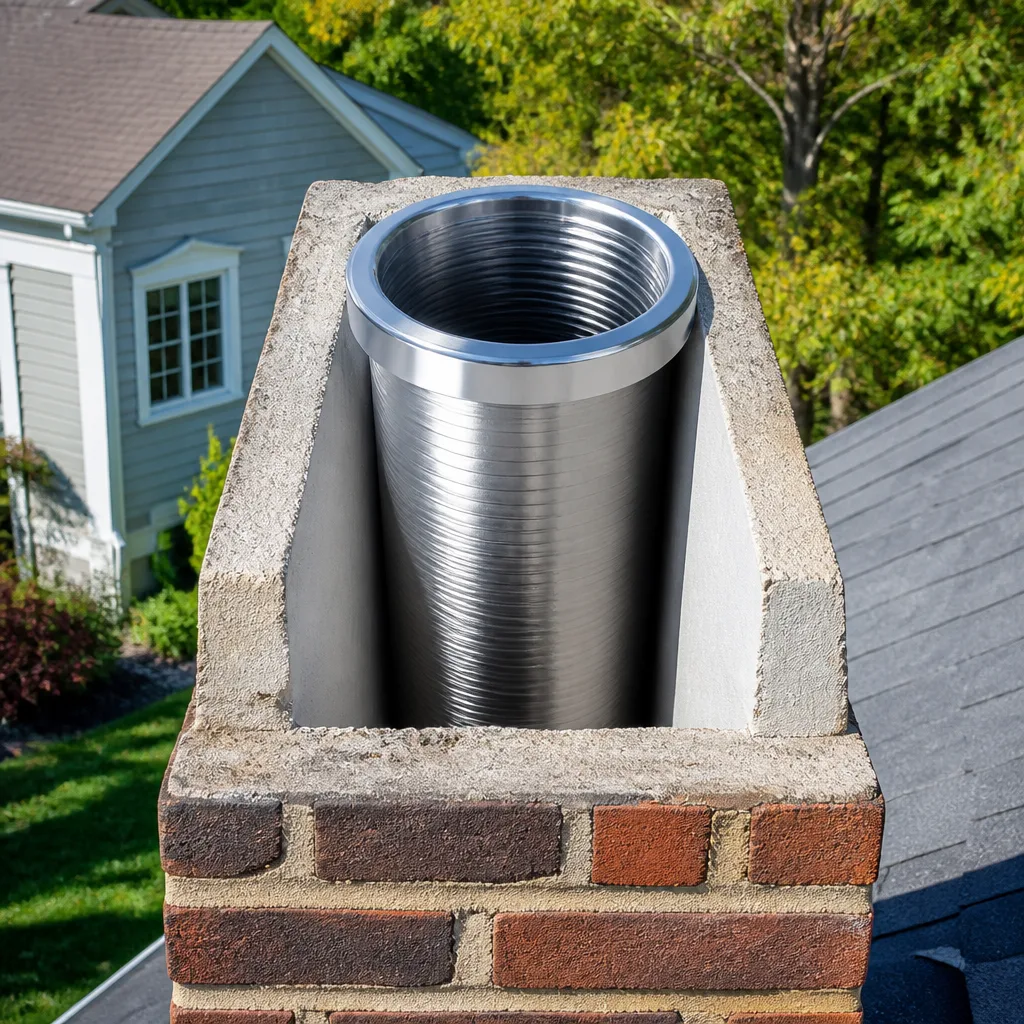
One repair option worth knowing about if you have older clay tile liners showing cracks but your brick is still structurally sound: HeatShield resurfacing. Instead of tearing down the chimney to replace the liner, a cerfractory coating is applied directly to the existing flue walls, sealing cracks and restoring a smooth passage. It’s a meaningful cost-saving alternative to full relining, and it’s the kind of fix that only makes sense when you’ve diagnosed the liner condition properly. For full relining jobs, where the existing flue is too far gone to resurface, we use DuraFlex flexible liner systems, which install through the existing chimney without demolition and carry a professional-grade service life. The point isn’t that every chimney needs these products. It’s that the diagnosis should tell you what the repair actually requires, not what’s easiest to sell.
Creosote Buildup You Can See or Feel
Creosote is the combustion byproduct that accumulates on flue walls as wood smoke cools and condenses. It forms in three stages, and most Sylmar homeowners only ever see stage one. Stage one is the fine, flaky, grayish dust that coats the firebox and damper after several fires. It’s normal, easy to remove, and exactly what a routine chimney sweeping addresses. Stage two is the crusty, tar-like buildup that forms when fires burn cooler or wood isn’t fully seasoned. Stage three is the shiny, hardened glaze that looks like black enamel, and it’s a serious fire risk.
Here’s what to look for and what it means:
- Flaky dust in the firebox: Normal after burning. Vacuum it out and maintain a regular sweeping schedule.
- Crunchy, dark brown or black crust on the firebox walls or damper: Stage-two creosote. This reduces draft and is much harder to remove. It signals burning habits or fuel quality issues: green wood, restricted air supply, or smoldering fires.
- Shiny, tar-like glaze anywhere in the flue: Stage-three creosote. This is the fire-starting kind. It’s highly combustible, expands when heated, and can ignite at temperatures reached by an ordinary fire. If you see this, stop using the fireplace until the flue has been professionally cleaned.
- Fluffy, sooty deposits on the damper or smoke shelf: This is a sign that a fire has already had reduced draft or incomplete combustion. It often accompanies a partially obstructed flue or a damper that wasn’t fully opened.
One fact that sticks with people: a wood fire that burns hot and bright with fully seasoned wood produces dramatically less creosote than a smoldering fire with unseasoned wood. The chemistry is straightforward. If the fire burns hot enough, the volatile compounds in the smoke combust completely, leaving little residue. If the fire smolders, those compounds condense on the cooler flue walls as creosote. This is why we recommend against burning construction lumber, painted wood, or wood that hasn’t been seasoned for at least six to ten months. The moisture content of the wood matters more than most people realize.
When creosote accumulates in sufficient volume, it also absorbs moisture and creates the cold-fireplace odor we described earlier. The same deposit that threatens your chimney’s fire safety is actively degrading your indoor air quality. The good news is that this is the single easiest problem to solve: a thorough sweeping removes creosote at all accessible stages and restores the flue to a safe operating condition.
Damaged or Missing Chimney Cap
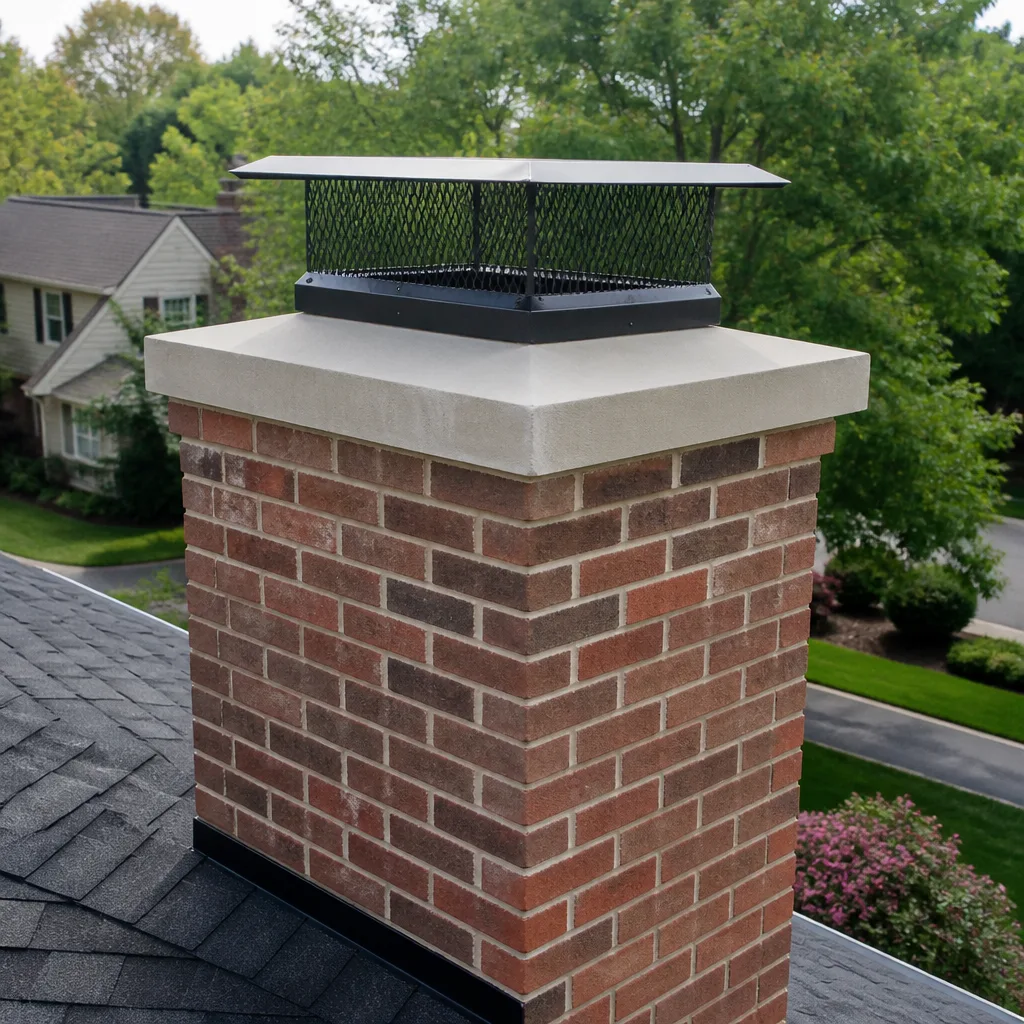
The chimney cap is the most overlooked component on the entire system, and in the Sylmar area, wind events make it one of the most commonly damaged. A proper chimney cap, typically a stainless steel or copper unit with a mesh screen around the sides and a solid top, does three jobs: it keeps water out of the flue, it keeps animals and debris out, and it contains sparks so they don’t land on your roof or dry brush. Lose any one of those functions and you’ve introduced a cascade of potential problems.
Here’s what to check, and what each finding indicates:
- No cap at all: This is the most common condition on older Sylmar chimneys that predate modern building practices. Without a cap, the flue is wide open to rain, birds, squirrels, and leaf litter. The fix is straightforward: install a properly sized cap with a spark arrestor. Brands like Olympia Chimney and Copperfield make solid stainless models that hold up to years of sun and rain.
- Damaged or separated mesh: The spark arrestor screen is torn or pulled away from the cap body. This allows embers to escape onto the roof and defeats the spark-containment function. In a dry Sylmar fire season, this is a genuine hazard.
- Displaced or wobbling cap: A cap that’s loose, tilted, or partially off was likely moved by wind or by an animal trying to get inside. If the cap can move, water can enter around the base, and the flue is no longer protected from rain. This is a repair that’s small in scope but real in consequence.
- Rusted-out cap: Galvanized steel caps eventually rust through, especially at the weld points and screen edges. A rusted cap is on borrowed time, and once it fails, you lose all three protections at once.
In our experience, several Sylmar neighborhoods see more cap damage than others, particularly homes in the hillier areas and along the canyon-adjacent streets where winds funnel through with more force. After a Santa Ana wind event, it’s worth a visual check of your chimney cap from the ground with binoculars or a phone camera on zoom. If the cap is tilted or the mesh is torn, schedule a repair before the next rain or fire season. We stock components from Famco in our service van for exactly this scenario: stainless caps and caps with heavy-gauge mesh that stand up better to the wind than cheaper big-box versions. For help selecting the right products for your setup, see our Choosing the Right Chimney Cleaning Brand: A Buyer’s Guide for Sylmar.
Don’t attempt to climb onto your roof to inspect or remove a cap. If you can’t see it clearly from the ground, that’s a job for someone who can. And if you can see it from the ground and it looks wrong, that’s enough to justify a service call.
Unusual Sounds: Wind, Animals, and Dripping
Sound is a diagnostic tool most homeowners don’t use. But a chimney produces a narrow range of normal sounds, and anything outside that range is information. The three sound categories we hear about most from Sylmar homeowners: wind, animal activity, and water.
- Howling or moaning when the wind blows: This usually means the cap is damaged or missing, allowing wind to enter the flue and resonate. The sound is the flue acting like an organ pipe. It can also indicate drafting problems, because the same wind entering the flue can overcome the updraft and push smoke back down when the fireplace is lit.
- Scrabbling, scratching, or fluttering: You have a resident. Birds are the most common in open flues, followed by squirrels. The noise is often heard in the morning and evening when animals are most active. The fix is removal, cleaning (animal nesting material is combustible and can block the flue), and a proper cap installation to keep them out.
- Dripping inside the flue: If you hear water dripping when it rains, the cap is missing or damaged, or the crown is cracked, allowing water to enter the flue directly. Water pooling at the smoke shelf or firebox floor leads to rusted dampers, mortar erosion, and that musty odor we covered earlier.
- Ticking or cracking after a fire: This can be normal thermal expansion of the flue liner as it heats and cools. But persistent cracking sounds may indicate a liner that’s already cracked and flexing with temperature changes. Listen for rhythm: regular, soft ticking is usually fine; irregular, sharp snapping warrants a camera inspection.
A sound that’s easy to dismiss but worth mentioning: a hollow, echoing quality when you tap the firebox walls or smoke chamber with a knuckle. A solid brick surface should sound dull and solid. A hollow sound means the mortar has eroded behind the surface, leaving voids. This is the sound of a repair waiting to happen, and it’s something an experienced sweep listens for during any inspection.
Common Mistakes to Avoid
- Ignoring a smoky smell because “it’s always been like that.” Chronic odor isn’t normal. It’s a sign of creosote accumulation, moisture, or both. Anytime a smell persists for more than a day or two after the last fire, the flue needs professional attention.
- Burning green or unseasoned wood to save money. Green wood produces less heat, more smoke, and dramatically more creosote. The savings on firewood disappear into more frequent sweeping and higher fire risk.
- Cleaning creosote with a chimney cleaning log instead of scheduling a sweep. Cleaning logs can loosen stage-one creosote, but they don’t remove it, and they do nothing for stage-two or stage-three deposits. They create a false sense of safety.
- Painting over efflorescence with masonry paint. Painting seals the salt deposit beneath the surface, and the trapped moisture accelerates brick damage from the inside. The water entry point has to be found and fixed first, not covered up.
- Using the fireplace as a trash incinerator. Burning paper trash, cardboard, or food waste produces unpredictable combustion byproducts, including chemical residues that coat the flue and create stubborn, hazardous deposits. Fireplaces are designed for wood, not waste.
- Ignoring a cold-start backdraft because the fire “gets going eventually.” Every backdraft event sends carbon monoxide and smoke into the living space. Hold off on lighting until you’ve pre-warmed the flue, and if the problem persists, stop and get it diagnosed.
- Waiting until fire season to address a damaged spark arrestor. A torn or missing spark screen is a roof fire risk, and in Sylmar’s dry months that risk compounds. If you see the damage, fix it before the weather turns.
When to Call a Professional
Stop burning and schedule an inspection if you see smoke backdrafting that doesn’t resolve with pre-warming and pressure equalization, if you see stage-three creosote glazing in the flue, if you have a persistent odor that gets stronger in humid weather, or if the chimney shows visible cracking, leaning, or spalling brick. These are conditions where continued use isn’t worth the risk. For less urgent signs, like stage-one creosote, minor mortar wear, or a loose cap, you have time, but you should still schedule a sweep and inspection within the season. Chimney Sweep Sylmar offers free estimates in Sylmar, and we’re equipped to handle cleaning, diagnosis, and repair under one roof, which means one call covers the full scope of whatever the inspection finds. Call (833) 620-0634.
Frequently Asked Questions
A standard chimney sweeping in Sylmar typically falls in the $180 to $320 range, depending on the condition of the flue, the amount of creosote present, and whether any additional access issues exist. If the inspection during the sweep reveals damage requiring repair, that work is quoted separately. Call (833) 620-0634 for an exact quote, estimates are free.
The National Fire Protection Association recommends a chimney inspection at least once a year, with sweeping performed whenever creosote buildup reaches 1/8 inch or more. A chimney used regularly through a Sylmar winter should be swept annually at minimum. Homes that burn unseasoned wood or use the fireplace heavily may need two cleanings per season.
Not necessarily. Small cracks in clay flue tiles can sometimes be repaired with HeatShield resurfacing, which applies a cerfractory coating to the existing flue walls without demolition. More extensive damage may require a full relining with a DuraFlex flexible liner system. The determination requires a camera inspection to see the actual condition of the flue, and a reputable sweep will show you the footage before recommending anything.
Creosote accumulates, and since creosote is combustible, the risk of a chimney fire increases with every burn. Even without ignition, heavy creosote absorbs moisture, creates persistent odors, and reduces draft, which pushes smoke and carbon monoxide back into the home. The accumulation also accelerates liner deterioration because the corrosive compounds sit against the flue walls. Skipping a cleaning isn’t a savings, it’s a deferred cost with interest.
Heat and humidity increase the vapor pressure of creosote, causing it to off-gas more aggressively. The same creosote that barely smells in dry winter air becomes noticeably odorous when the air is warm and moist. It’s not a seasonal fluke, it’s a sign that creosote has been accumulating and needs to be removed. A thorough sweeping will eliminate the smell at the source.
We don’t recommend it. A proper chimney cleaning requires specialized brushes sized to your flue, access equipment for the roof, and the ability to identify damage that’s invisible from the ground. More importantly, the job involves ladders, heights, and soot that contains irritants. It’s a professional job with professional reasons behind the expense. If you’re concerned about creosote between cleanings, the best thing you can do is burn fully seasoned wood and keep your damper maintained.
The Bottom Line
A chimney talks. Efflorescence says water is getting in. Odor says creosote is building up, or something has moved in. Backdraft says the exhaust path isn’t working. Crumbling mortar says the structure is wearing out. None of these are normal, and none of them go away on their own. The difference between a fast, affordable repair and a major reconstruction is usually the amount of time between noticing a warning sign and acting on it. If you’re seeing any of the signs in this guide, call a chimney repair specialist in Sylmar who can inspect, sweep, and fix what’s wrong, one call, one team. Don’t forget that your dryer vent deserves the same attention, since a clogged vent is a leading cause of residential fires. We handle dryer vent cleaning in Sylmar as part of the same full-system service.
Written by the team at Chimney Sweep Sylmar, serving Sylmar since 2013. Explore more guides & resources on our blog.
See the difference
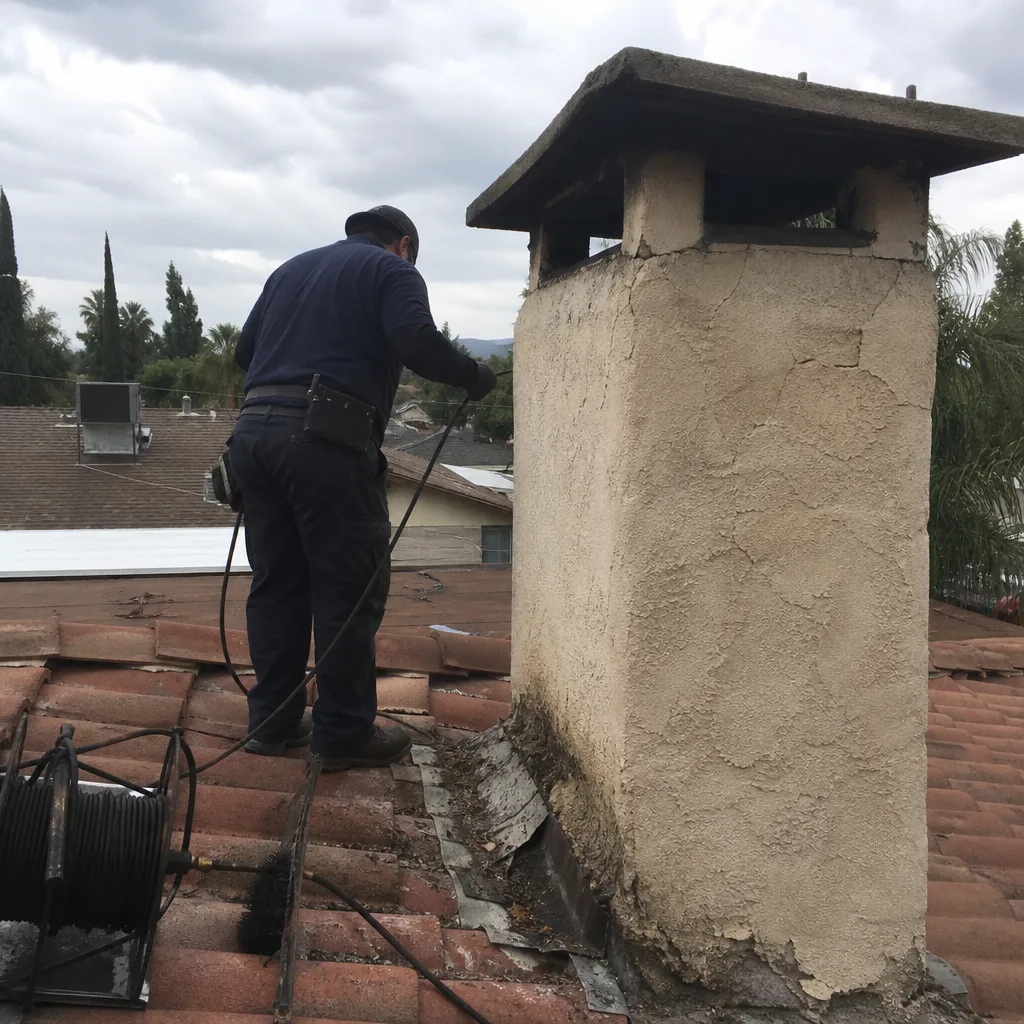 Before
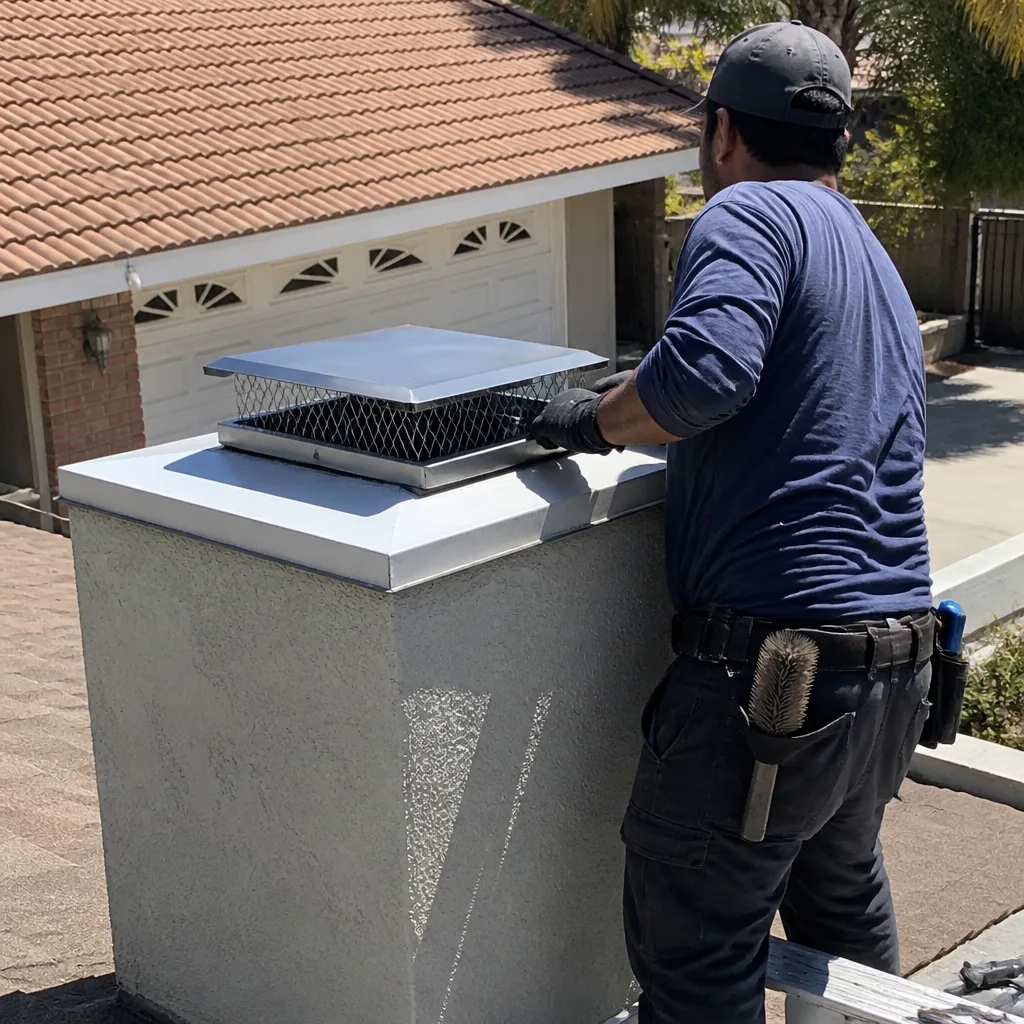 After
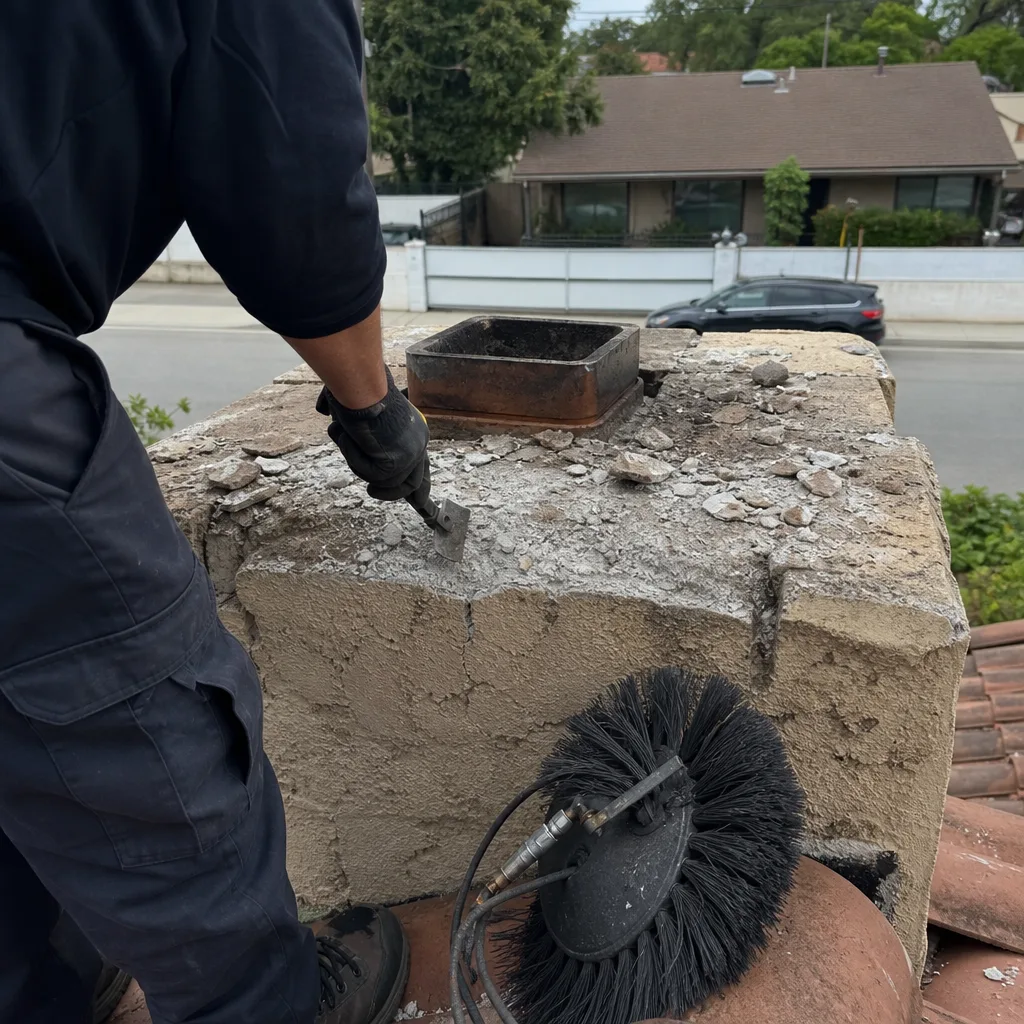 Before
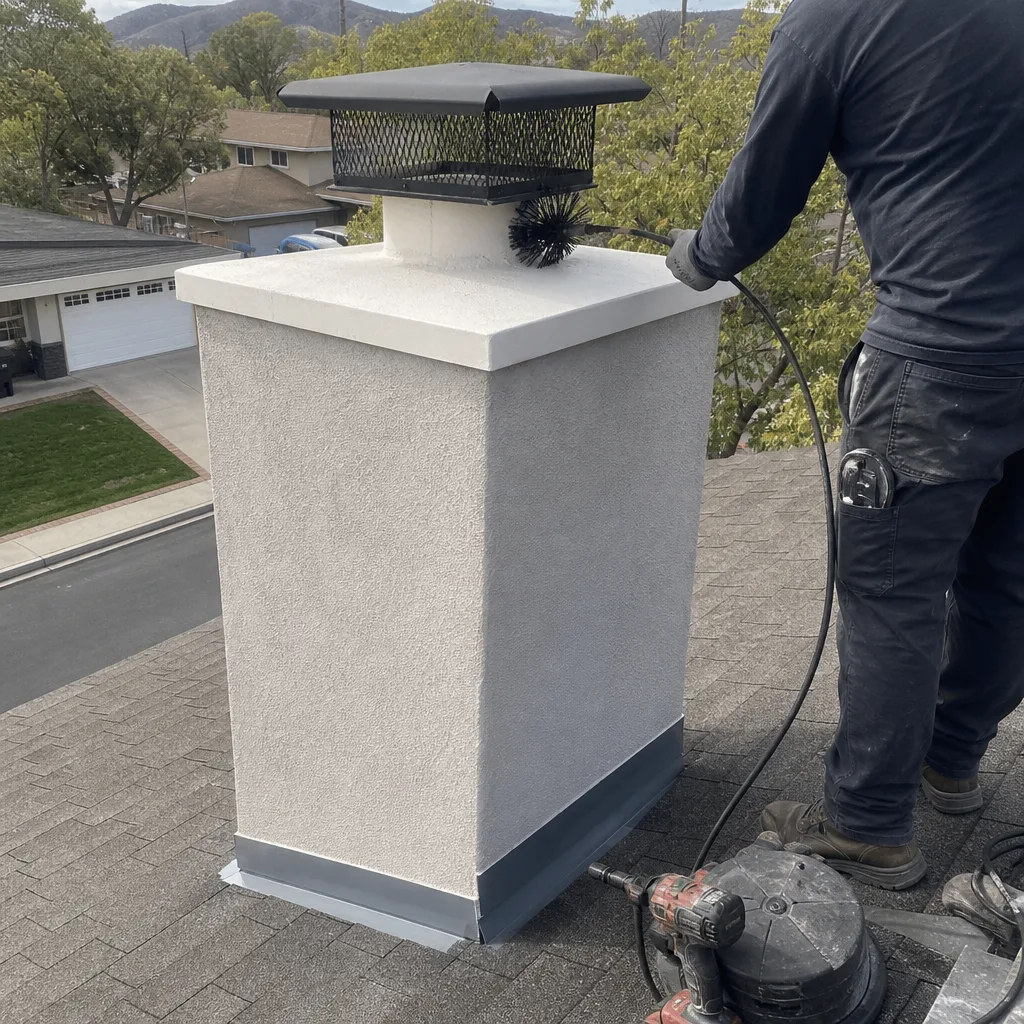 After
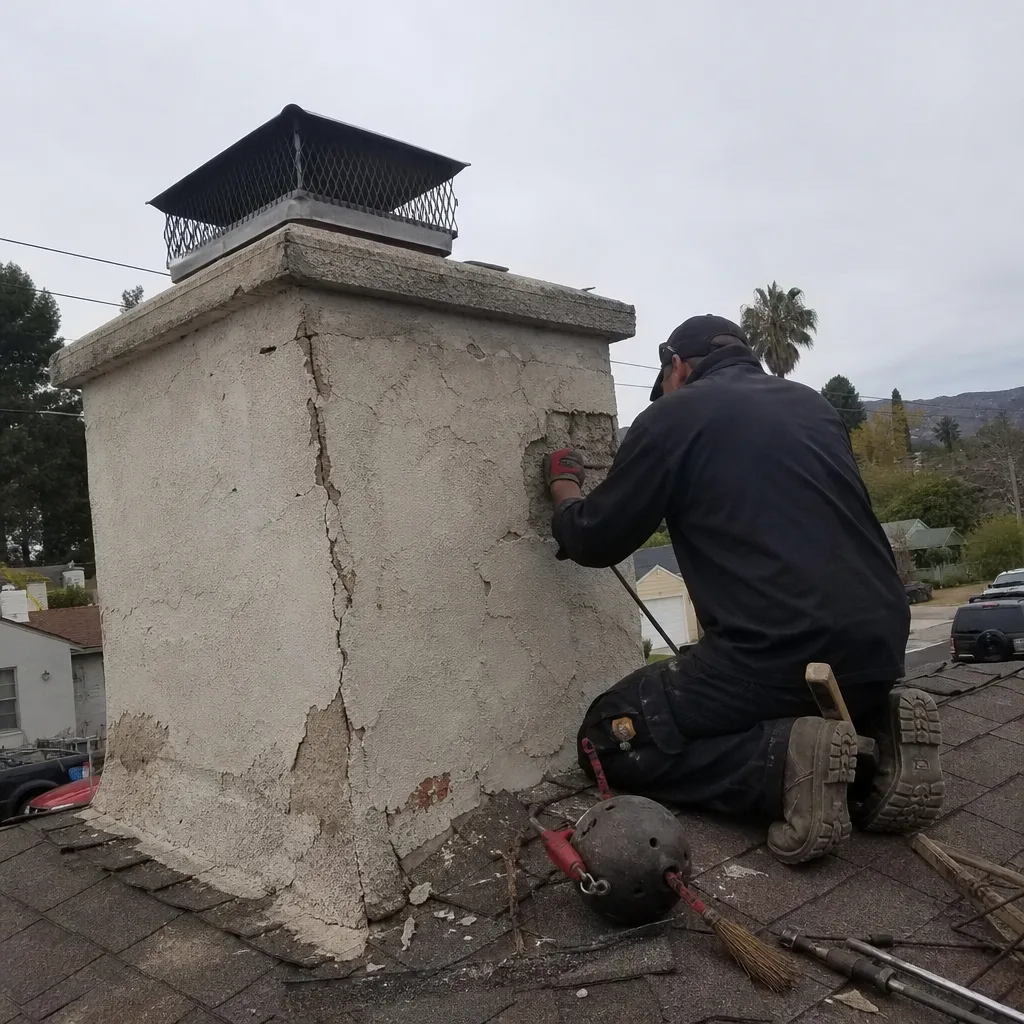 Before
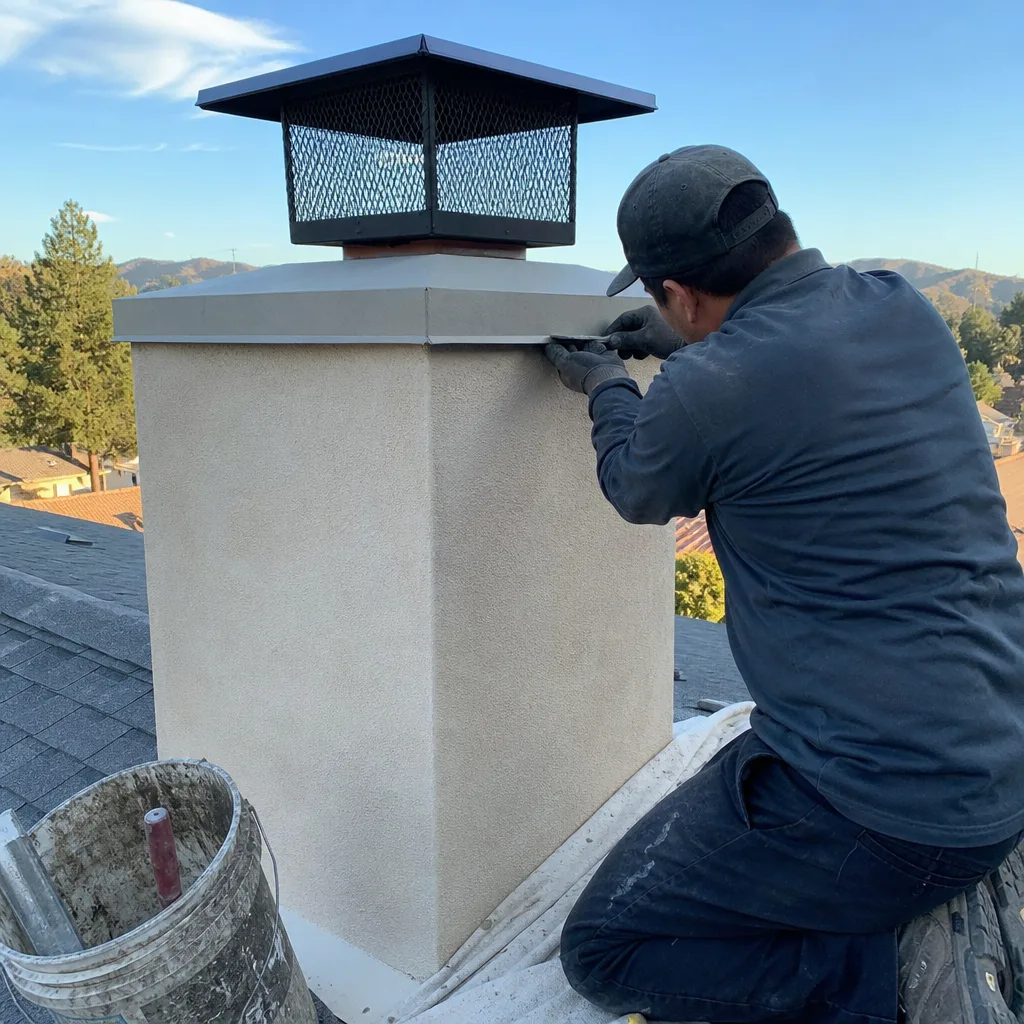 After