
Last updated November 3, 2026
 Sweep & inspection
 Caps & crowns
 Flue relining
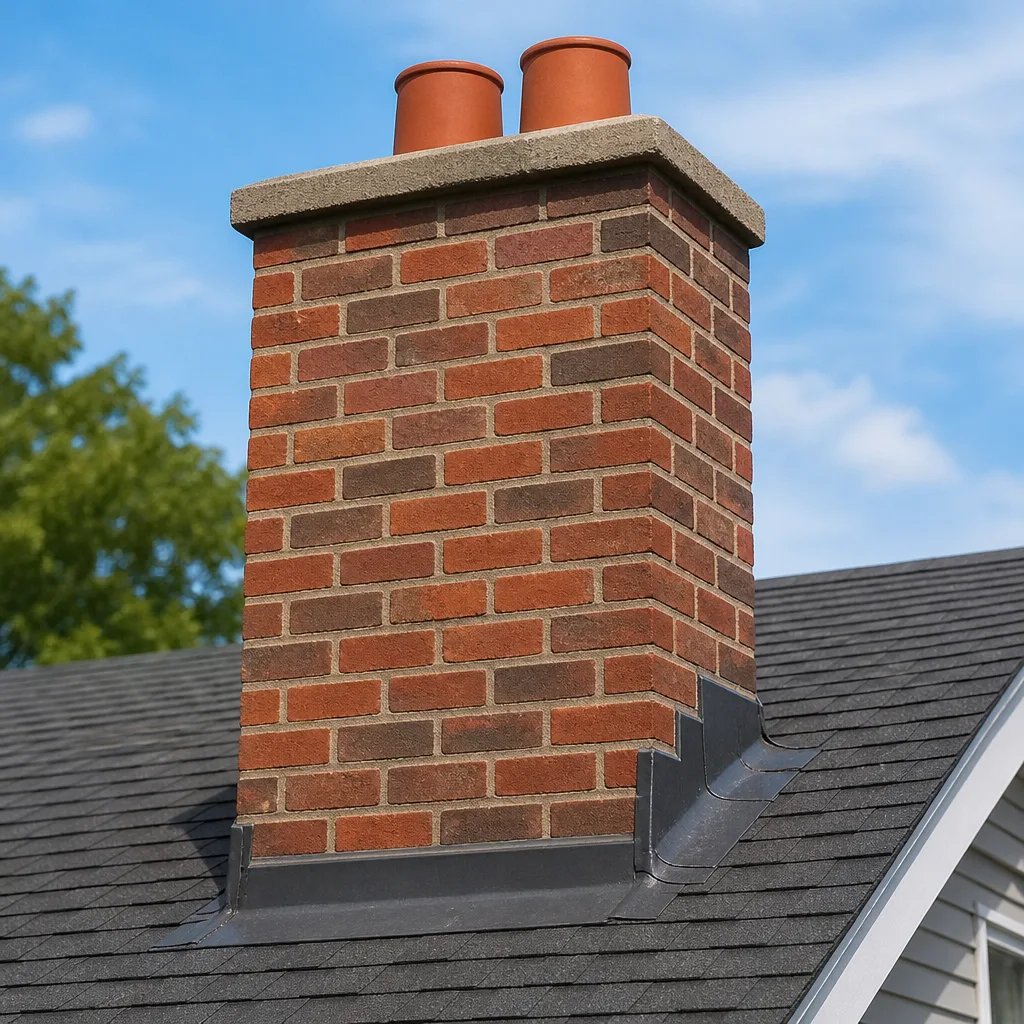 Masonry repair
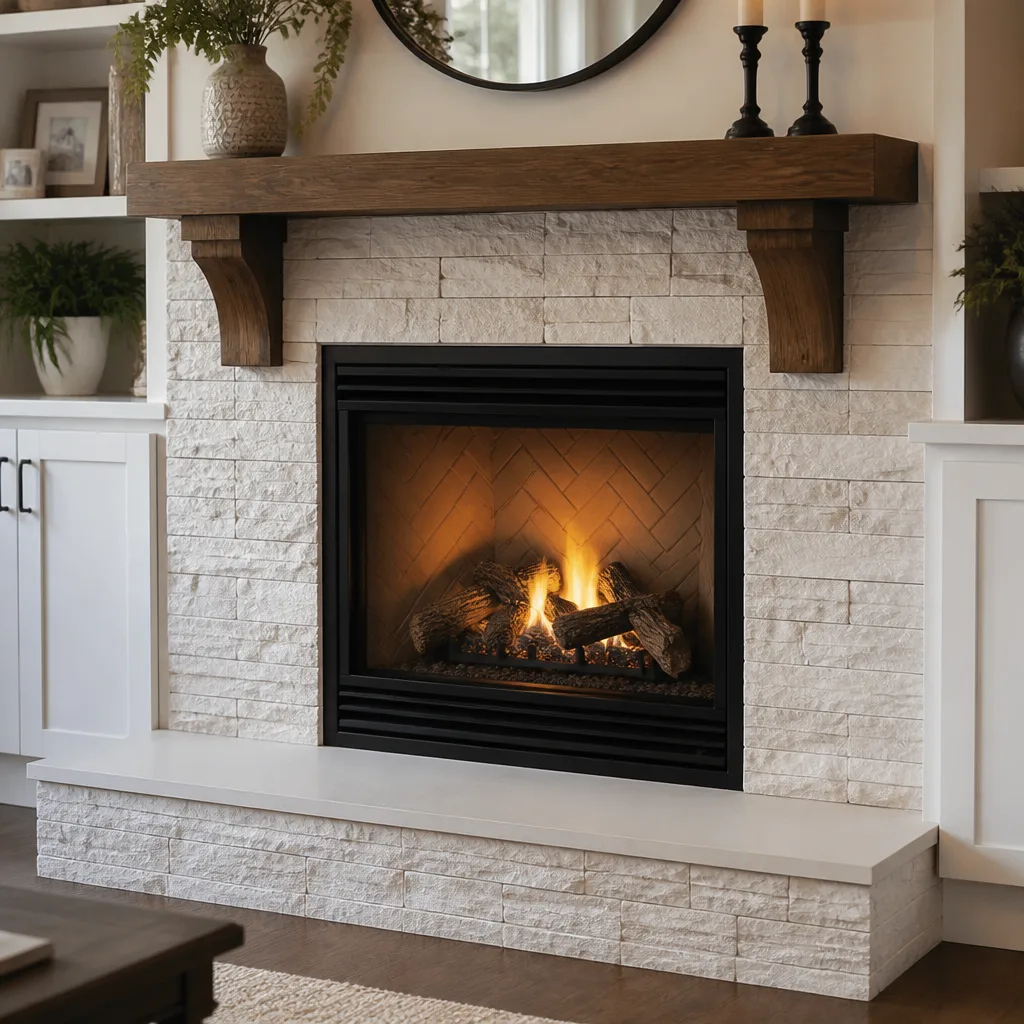 Gas fireplace service
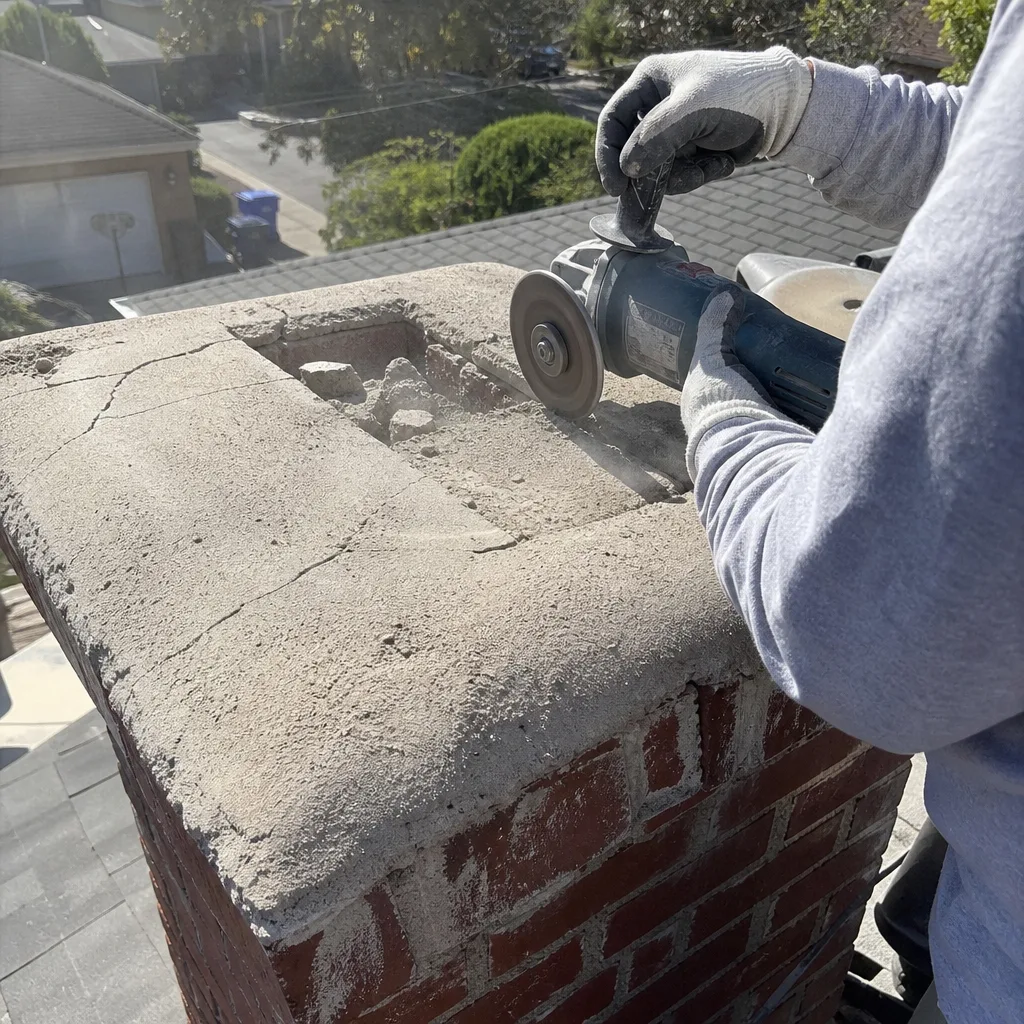
Level 1 sweep and inspection to the NFPA 211 annual standard - flue, crown, cap, and flashing checked and photographed
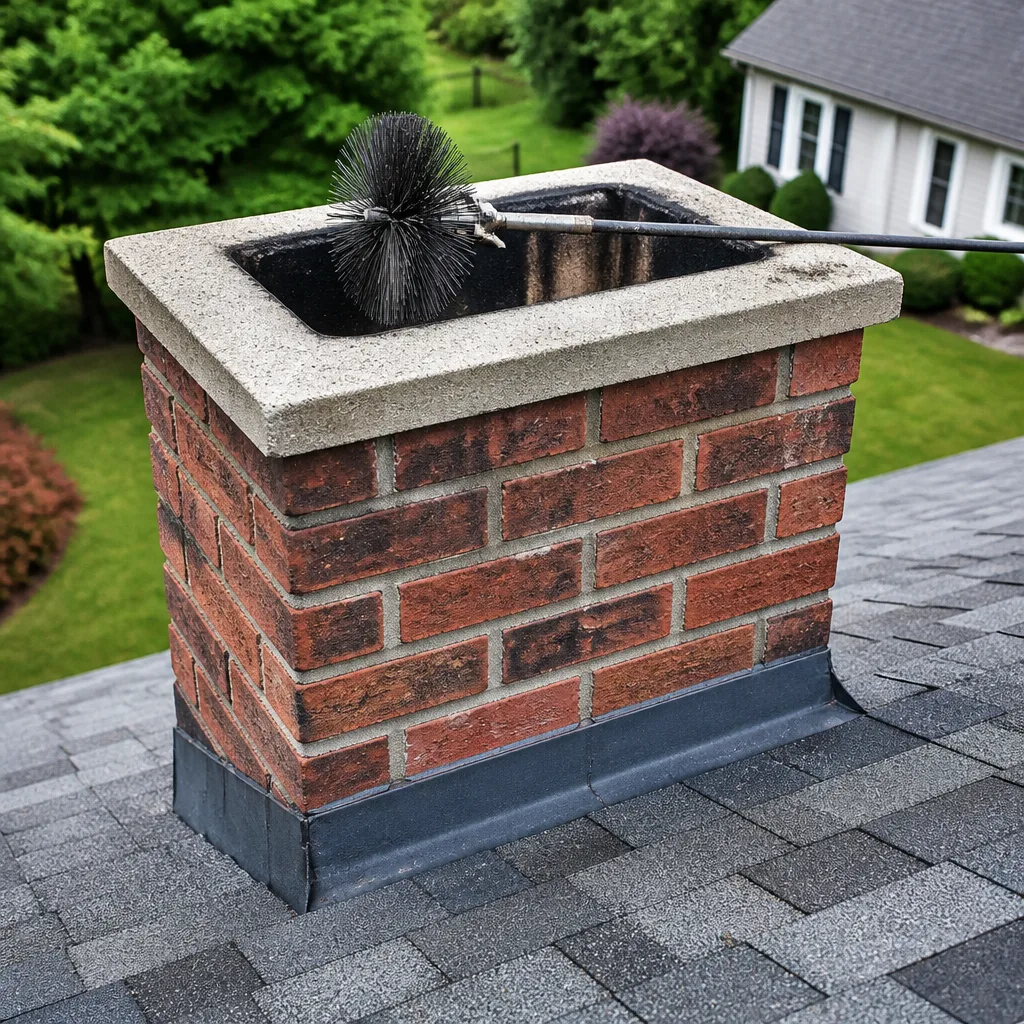
Chimney sweep logs do not sweep chimneys. They loosen some creosote - which then falls where a brush and vacuum still have to collect it.
The Complete Chimney Sweep Guide for Sylmar Homeowners
Most Sylmar homeowners who had a chimney fire in the past five years had a sweep done within the previous 18 months. The problem wasn’t skipping service. It was not knowing what questions to ask when the tech showed up. This guide changes that. You’ll learn what a real sweep actually involves, which inspection level your Sylmar home needs, how to read the report you should be handed at the end, and which findings mean repair before your next fire. We’ll cover the specific ways Sylmar’s climate affects creosote buildup, and why the dry Santa Ana conditions make this part of the San Fernando Valley different from coastal LA or the wetter Pacific Northwest.
Quick Answer
A chimney sweep in Sylmar is not one service but a sequence of system checks: inspection, creosote removal, component evaluation, and a written condition report. Expect to pay between $180 and $340 for a standard Level 1 inspection and sweep on a typical Sylmar fireplace, with Level 2 inspections running higher when camera equipment is involved. The right time to schedule is late summer or early fall, before the first cold snap pushes Santa Ana winds through the passes and everyone in the 91342 zip code fires up their wood stoves on the same week.
Styles & brands we work with
- Sweep & inspection
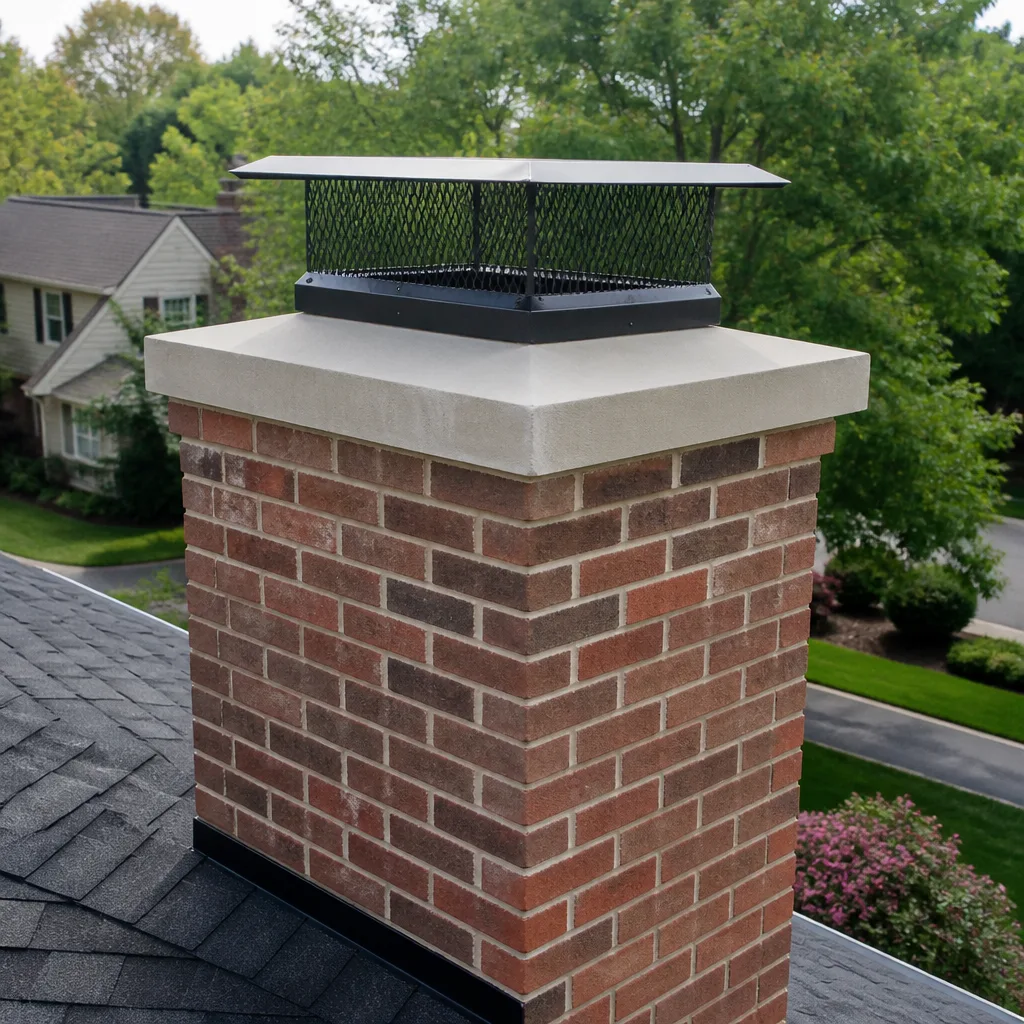
- Caps & crowns
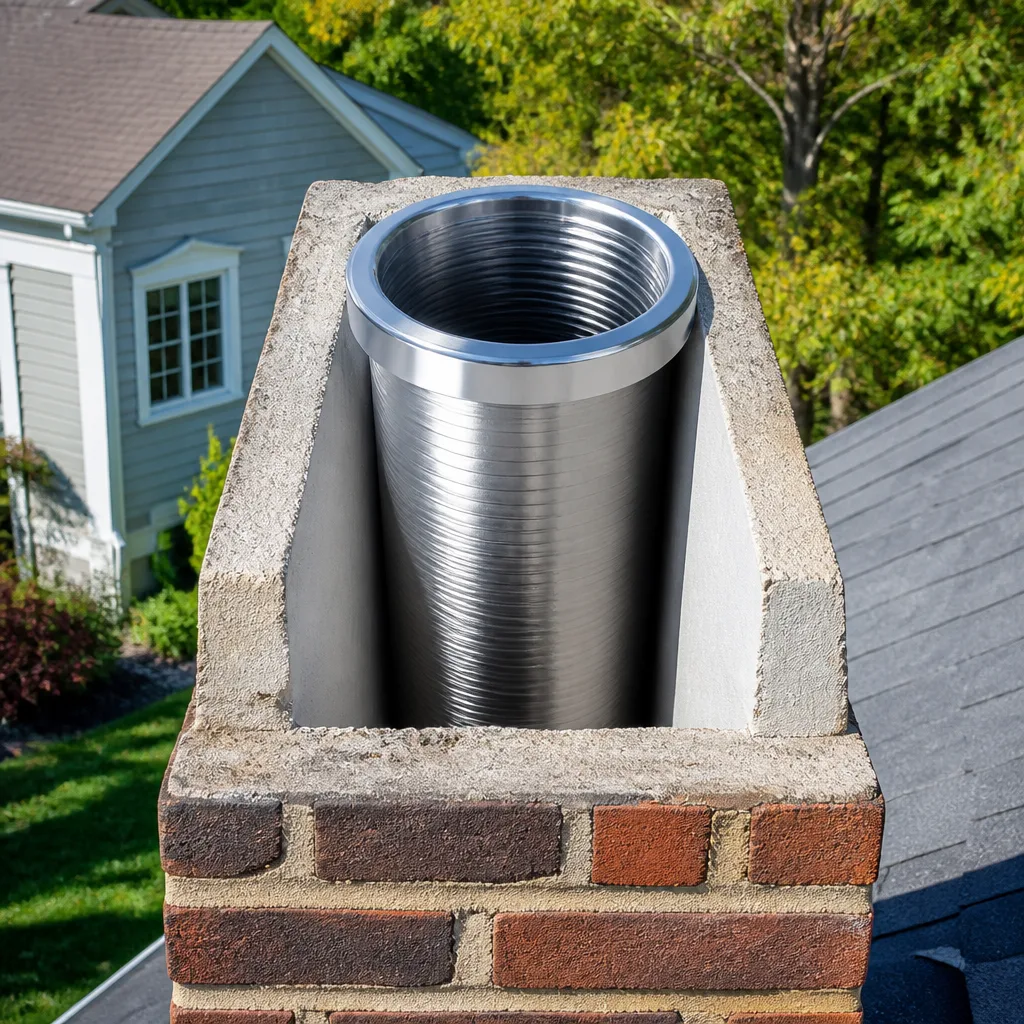
- Flue relining
- Masonry repair
- Gas fireplace service
Table of Contents
- What a Chimney Sweep Actually Includes
- Why Sylmar’s Climate Creates a Different Creosote Pattern
- Level 1 vs. Level 2 Inspections: What Each One Examines
- Rotary Brush Systems vs. Rod-and-Brush Passes
- How to Read a Chimney Sweep Report
- How Often Should You Sweep a Chimney in Sylmar?
- Findings That Require Repair Before Your Next Fire
- Common Mistakes to Avoid
- When to Call a Professional
- Frequently Asked Questions
What a Chimney Sweep Actually Includes
A proper chimney sweep in Sylmar is a diagnostic process, not a brush pass. Here’s the sequence, step by step:
- Visual pre-inspection: The tech checks the firebox, damper, smoke chamber, and accessible flue before any tools come out. This is where obvious problems get flagged: a damper that won’t fully open, visible spalling in the firebox brick, water staining on the smoke shelf.
- Flue measurement and tool selection: The sweep measures the flue dimensions and inspects the liner material. Clay tile, stainless steel, and cast-in-place liners each require different brush types and techniques. Using the wrong brush on a metal liner can scratch the surface and create corrosion points.
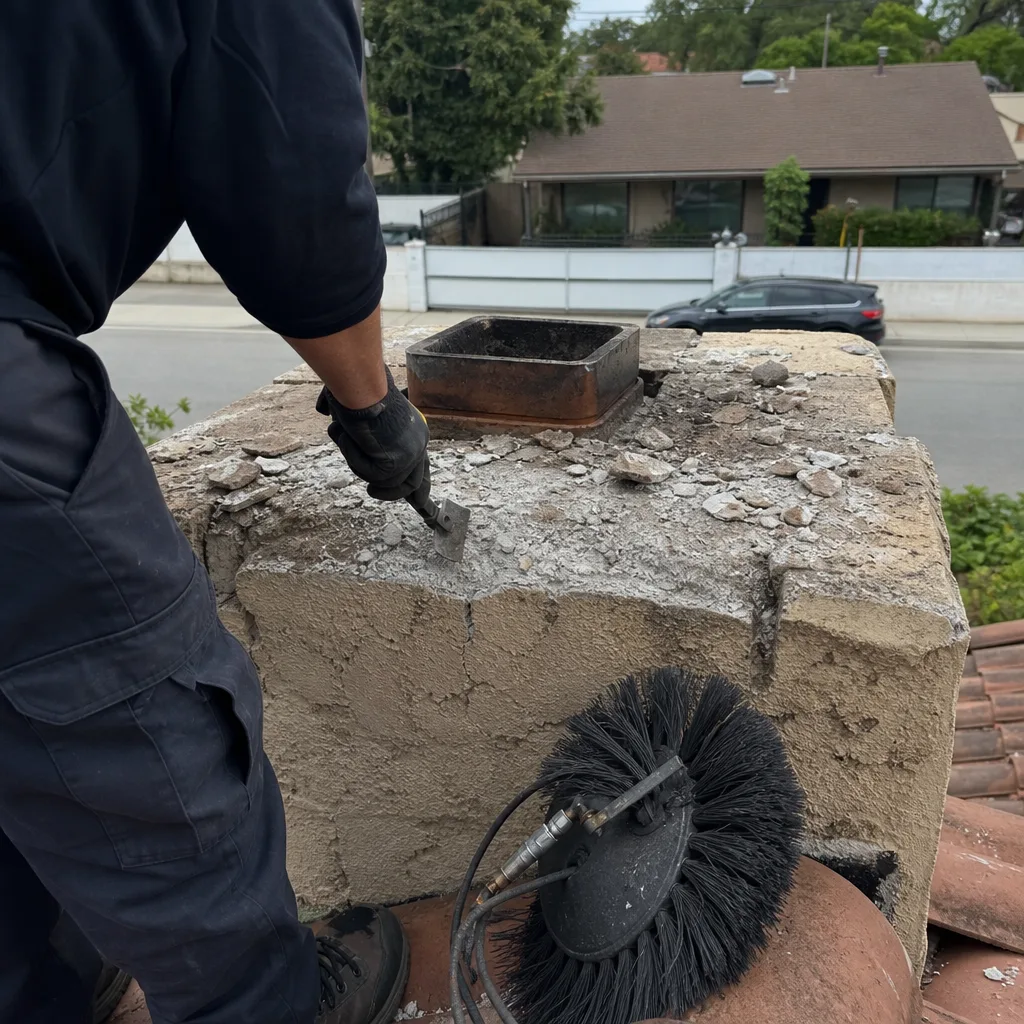
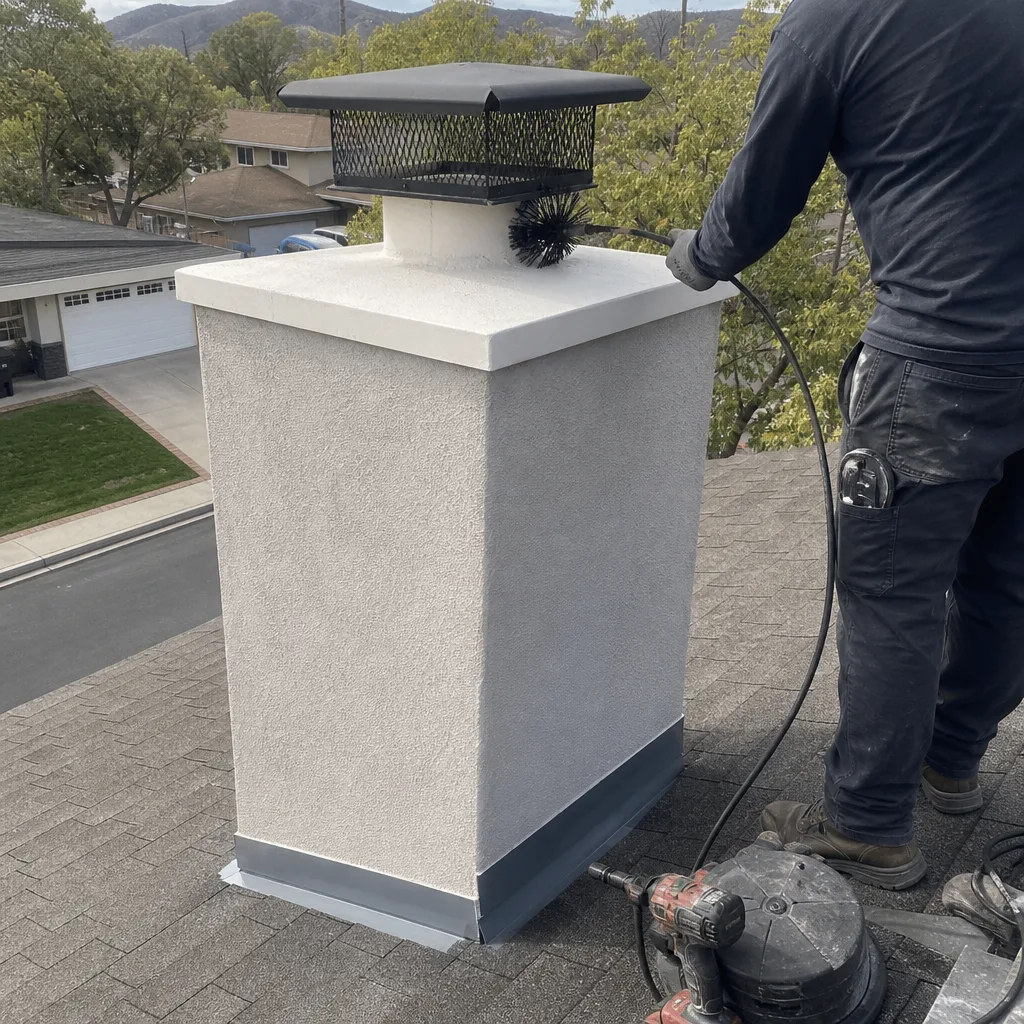
- Creosote removal: This is the actual sweeping. For light to moderate buildup, a rod-and-brush pass works. For heavier deposits, especially third-degree creosote, a rotary system with a whip head attached to a drill does the job without damaging the liner. We’ll get into the difference later in this guide.
- Smoke chamber and firebox cleaning: The throat area and smoke chamber collect creosote and soot that a flue-only pass misses. A thorough sweep includes hand-brushing these areas and vacuuming the debris, usually with a HEPA-filtered unit that keeps dust out of your living room.
- Component inspection: The chimney cap, crown, flashing, and damper all get checked. A missing cap is an open invitation for rain, birds, and embers. A cracked crown lets water into the masonry. A damper that doesn’t seal properly sends heated air out of your house all winter.
- Written condition report: You should receive documentation at the end, not a verbal “looks good.” The report should note what was found, what was cleaned, and what needs attention. We’ll cover how to read this report in detail below.
This full-sequence approach is what separates a thorough Chimney Sweep in Sylmar visit from a budget job that only brushes the flue walls and leaves the smoke chamber untouched. When you understand the steps, you can tell the difference early in the appointment.
Why Sylmar’s Climate Creates a Different Creosote Pattern
Sylmar sits at the northern edge of the San Fernando Valley, right where the 5 and 210 freeways converge below the San Gabriel foothills. The geography matters for chimney health. Here’s what we see in this specific climate that you wouldn’t see in, say, Santa Monica or Long Beach:
- Santa Ana wind cycles: When high pressure builds over the Great Basin, dry air funnels through Soledad Canyon and the Newhall Pass, dropping humidity into the single digits. These conditions pull air through any small gap in your home’s envelope, including an open or leaky damper. The effect on your chimney is a constant low-grade draft, even when you’re not burning. Air moving through a flue with residual creosote encourages the deposits to harden into a glaze-like tar. This is why Sylmar chimneys often show third-degree creosote after fewer burns than homes in more humid coastal areas.
- Cold snap burn surges: Sylmar gets genuinely cold on winter nights, especially in the foothill neighborhoods around Veterans Memorial Park and the Stetson Ranch area. When the temperature drops, every fireplace and wood stove in the area lights up over the same three or four nights. Those first fires are often built with wood that’s been sitting outside through the dry season, and burn behavior on a cold, windy night sends more unburned particulates up the flue. The result is rapid creosote accumulation in a short window, right when the chimney is working hardest.
- Dry wood, fast burns: The aridity that defines Sylmar’s climate means firewood stored outdoors dries out faster than in coastal communities. That sounds like a good thing, and it is for burn quality. But extremely dry wood burns hot and fast, which can spike flue temperatures and bake on creosote rather than keeping it in a softer, brushable form. A chimney that looked fine after a spring sweep can be significantly glazed by late January.
- Wind-driven down-drafts: The passes to the north and east of Sylmar create pressure differentials that can force air down a chimney, especially on single-story homes without adequate cap protection. A proper chimney cap with wind-rated design helps, but on strong Santa Ana nights, some down-draft is unavoidable. This pushes smoke and creosote vapor back toward the firebox and can accelerate deposit formation on the smoke shelf and damper.
In our experience working on chimneys throughout the 91342 area, the pattern we see most often is a two-season creosote cycle: soft, powdery stage-one deposits through the early burning season, then a rapid transition to hardened stage-two or stage-three buildup after the first sustained Santa Ana event. Planning your sweep schedule around this pattern, rather than an arbitrary calendar date, means your chimney stays in a cleanable condition all winter.
Level 1 vs. Level 2 Inspections: What Each One Examines
The inspection levels come from NFPA 211, the National Fire Protection Association standard for chimneys and venting systems. Understanding the difference helps you know what you’re paying for and whether the tech is doing the job thoroughly.
Level 1 Inspection
A Level 1 inspection is the standard add-on to a routine sweep. It covers the readily accessible portions of the chimney: the firebox, damper, smoke chamber, and the full length of the flue from above with basic hand tools and a flashlight. The tech checks for obvious obstructions, heavy creosote buildup, and basic structural issues that can be seen without specialized equipment.
- When it’s appropriate: Annual maintenance on a chimney that hasn’t had any changes to its use, fuel type, or structure since the last inspection. If you’re burning the same type of wood in the same fireplace as last year, and nothing unusual has happened (no chimney fires, no water leaks, no animal intrusion), Level 1 is the right call.
- What it doesn’t catch: Hidden cracks in the flue liner, gaps in mortar joints, or damage to the chimney crown that’s too subtle to see from the roofline with the naked eye. A Level 1 inspection is a visual check, not an internal diagnostic.
Level 2 Inspection
A Level 2 inspection includes everything in a Level 1, plus a camera scan of the entire flue interior, an exterior inspection from the roof, and an assessment of the attic and crawlspace areas where the chimney passes through the house structure.
- When it’s required: Any change in the system. Buying a Sylmar home with an existing chimney, changing fuel type (wood to gas or vice versa), relining the flue, or after any event that could have compromised the structure: a chimney fire, an earthquake, a lightning strike, or a tree impact.
- After a home purchase: If you bought a home in Sylmar built before 1980, and the chimney hasn’t had a documented Level 2 inspection within the past five years, you should schedule one before your first fire. Pre-1980 construction in this area often has original clay tile liners that have absorbed decades of thermal cycling. The 1971 Sylmar earthquake and the 1994 Northridge quake both put structural stress on masonry chimneys throughout the northeast Valley, and hairline cracks from those events can persist or worsen over time without being visible from the firebox.
- What it costs: In the Sylmar market, a Level 2 inspection typically runs $150 to $300 on top of the sweep price, depending on flue height and accessibility. It’s the most valuable upcharge in chimney maintenance, because the camera footage shows you exactly what’s happening inside the liner, not what the tech says is happening. That’s the difference between trusting a report and verifying it yourself.
A reputable sweep company will recommend the appropriate level. If you’re not sure which applies to your situation, ask for the Level 2. The cost difference is small compared to the cost of a chimney fire that damages your roof framing or catches your attic insulation on fire. Our Chimney Sweep Sylmar home team routinely performs both levels and will walk you through the decision before any work begins.
Rotary Brush Systems vs. Rod-and-Brush Passes
Not all sweeping methods are interchangeable. The right tool depends on what’s in your flue, and using the wrong one either wastes your money or risks damaging the liner.
The Rod-and-Brush Pass
A traditional rod-and-brush sweep uses a brush sized to the flue dimensions, attached to flexible rods pushed down from the roof (or up from the firebox using a bottom-up technique). The bristles scrape the flue walls as the sweep works the brush in a pushing and pulling motion. It’s effective for:
- Stage-one creosote: The soft, flaky, dark-brown powder that forms from routine wood burning. A brush pass removes this easily.
- Light stage-two creosote: Somewhat denser, crusty deposits that haven’t yet hardened into a tar-like glaze.
- Soot from gas appliances: Gas logs produce far less creosote than wood, but they do produce sulfur-based deposits that build up on the liner surface over time.
The limitation of rod-and-brush is physical. It relies on friction to scrape deposits loose. If the creosote has hardened into stage-three glaze (a shiny, tar-like coating that’s nearly as hard as the liner itself), a brush will slide over it without removing much. You’ll get a bill for a sweep, but the flue will still have a combustible coating.
The Rotary System
A rotary system uses a drill-driven whip head, usually with nylon or polypropylene flails, that spins at speed inside the flue and breaks up deposits through impact rather than friction. The whip head is sized to the flue diameter and can be adapted for clay tile, stainless steel, or cast-in-place liners. It’s the standard for:
- Stage-three glazed creosote: The hard, glass-like deposits that rod-and-brush passes can’t remove. Rotary flails chip it off the liner walls without requiring chemical treatment in most cases.
- Heavy stage-two buildup: When the crust is thick enough that a brush would just compact it rather than removing it, rotary is faster and more thorough.
- Pre-inspection cleaning: If a camera inspection is scheduled, a rotary pass first makes sense because it exposes the actual liner surface. Camera images through a creosote-covered flue reveal nothing useful.
The right company arrives with both systems on the truck and selects based on what the pre-inspection shows. At Chimney Sweep in Sylmar, we carry rotary equipment as standard because Sylmar’s dry-climate creosote pattern trends toward the hardened deposits that brushes can’t handle. If a company shows up with only a brush set, ask if they have rotary capability. Heavy glazed creosote isn’t a judgment call, it’s a removal problem with a specific tool solution.
How to Read a Chimney Sweep Report
The written report is the most important deliverable of any chimney service, and the part most often skimmed or ignored. For more guides & resources on reading your report, keep reading. Here’s what a proper report should contain and what the findings actually mean:
What You Should Be Handed at the End
A verbal “you’re good” is not a report. Insist on documentation. A legitimate sweep report includes:
- Date of service and tech name: Essential for warranty claims and for tracking service history if you ever sell the home.
- Pre-sweep findings: Creosote stage and location, obstructions found, liner condition notes, damper status, cap or crown issues.
- Work performed: What was swept, what tools were used, what areas were cleaned (flue, smoke chamber, firebox), and any additional work like cap replacement or damper adjustment.
- Post-sweep condition: A statement of what remains, if anything. Some stage-three deposits require more than one visit or a chemical treatment follow-up.
- Repair recommendations: Ranked by urgency: “Needs attention before next use” versus “Monitor over next season” versus “Cosmetic only.”
- Photos or video stills: For Level 2 inspections, you should get image files from the camera scan. These are your proof.
Decoding the Language
Some terms on a sweep report sound alarming but are routine. Others sound minor but are serious. Here’s a plain-English translation table:
- “Stage-two creosote noted, removed with rotary system”: Normal finding, properly addressed. Nothing to worry about.
- “Minor spalling in firebox”: The firebrick surface is flaking. Common in older Sylmar homes, especially those that saw heavy use during the cold snaps of 2019 and 2020. If it’s confined to a few bricks, it can usually wait. If it extends into the mortar joints, address it before next season.
- “Hairline cracks in flue liner”: This matters more than it sounds. A hairline crack in a clay tile liner is a pathway for heat and gases to reach the masonry behind the liner. Over time, the crack widens. If this appears on your report, schedule repair before your next fire, not a year from now.
- “Smoke chamber spalling”: The smoke chamber is the transitional area between the firebox and the flue. If its surface is flaking, you have moisture intrusion or thermal stress. This is a repair issue, not a monitoring issue. The smoke chamber gets extremely hot and damaged surfaces there are a fire spread risk.
- “Damper seal failure”: The damper doesn’t close tightly. This lets heated air from your home escape up the chimney all winter long, and lets cold air pour in during those brutal January nights in the Valley. The fix is usually simple: a new damper plate or a top-sealing damper installed at the flue opening. It pays for itself in one heating season.
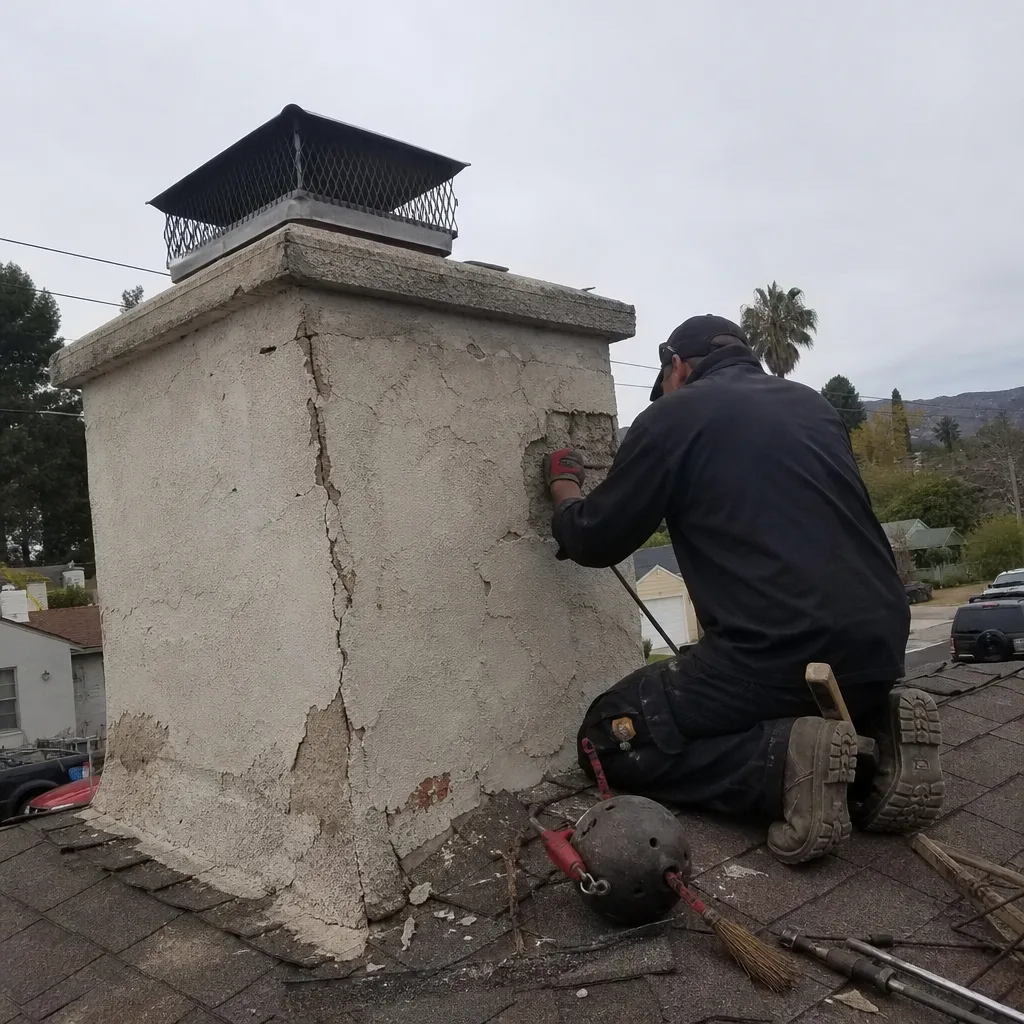
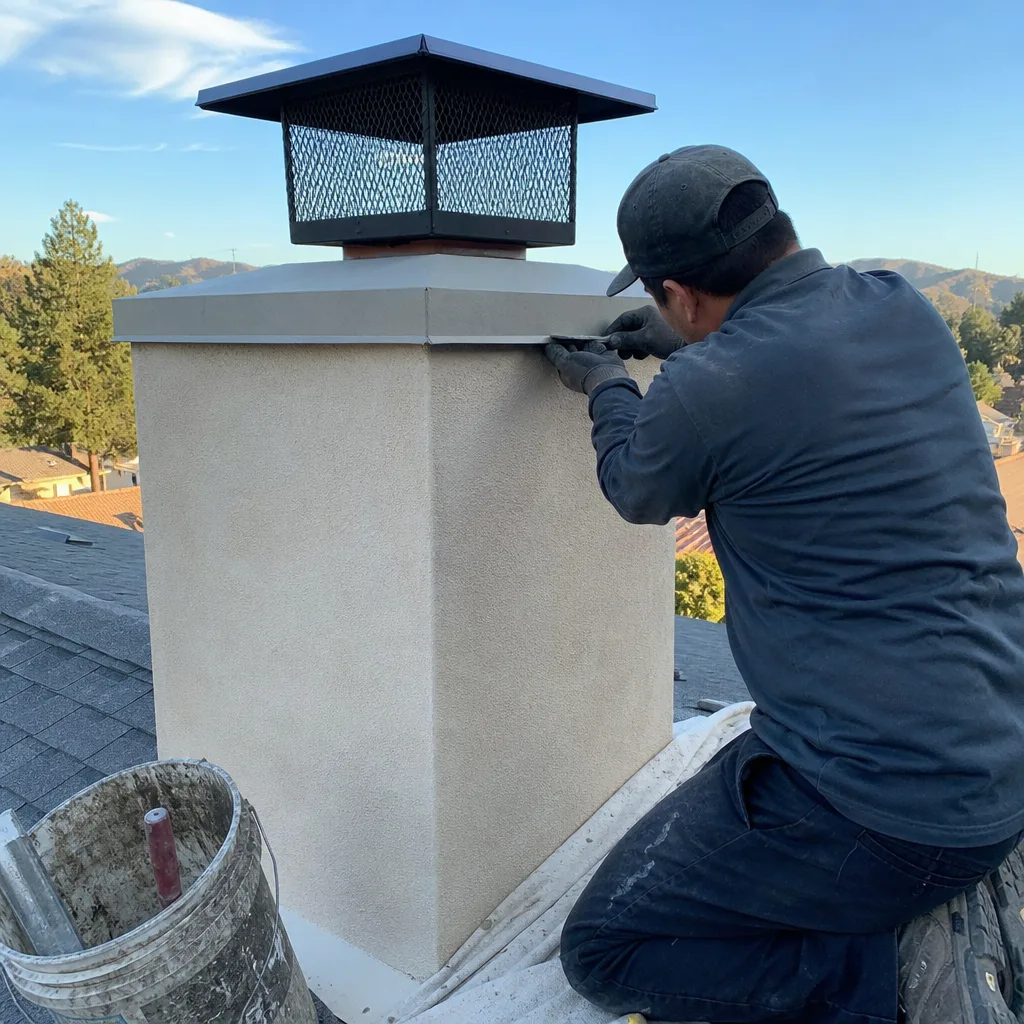
- “Crown crack”: The concrete crown at the top of the chimney is cracked. Water gets in, and in Sylmar’s freeze-thaw (yes, it does get cold enough in the foothills occasionally) the damage compounds. Crown repair is a before-next-winter item.
- “Missing rain cap”: Simple fix, but delaying it means rain getting in now, and if a bird nests in there during spring, you’re dealing with a full blockage by fall. This should be a same-visit fix if the tech has the right cap size on the truck.
The Report Is Your Maintenance Log
Keep every report. When you eventually sell your Sylmar home, a file of dated chimney inspection reports is a genuine selling point. It tells buyers the combustion system has been maintained and inspected by professionals, which is exactly the kind of documentation that makes a home inspection go smoother. More immediately, it tells the next sweep what your chimney’s baseline is, so changes are easier to spot over time.
How Often Should You Sweep a Chimney in Sylmar?
The standard answer everywhere in the country is “once a year.” The better answer for Sylmar depends on how you burn. Here’s a realistic schedule based on local conditions:
- Wood-burning fireplace used occasionally (under 30 fires per season): Annual sweep, in early fall before the burn season starts. One sweep per year, timing matters more than anything. Late September through October is ideal, before the first cold snap. This gets you ahead of the late-November rush when every company in the Valley is booked three weeks out.
- Wood-burning fireplace used regularly (30-80 fires per season, or multiple fires per week in cold months): Twice per season. One pre-season sweep in September or October, one mid-season check and clean in January. The dry Santa Ana creosote hardening pattern means a January revisit is not optional for heavy burners in Sylmar. What was clean in October may be glazed by mid-winter.
- Wood stove (freestanding or insert, used as primary heat): Twice per season minimum, possibly three times if you’re burning every day. Stoves burn hotter and more efficiently than open fireplaces, but the draft characteristics pull more creosote vapor into the flue. The Sylmar homes along Foothill Boulevard that use stoves for primary heat during winter are the ones we see with the fastest stage-three progression.
- Gas fireplace: The fire risk from creosote is minimal, but the annual check still matters for different reasons: gas logs produce sulfur deposits, the venting system needs to be confirmed clear, and carbon monoxide sensors should be verified. Annual inspection, sweep if needed. Dryer vent systems are a separate schedule, and we cover that in our Dryer Vent Cleaning in Sylmar guide.
Findings That Require Repair Before Your Next Fire
Some chimney problems can wait. Others mean you should not light another fire until the issue is addressed. Here’s how to sort them:
Stop Burning Until Repaired
- Flue liner cracks or gaps: Any breach in the liner is a direct pathway for heat and combustion gases to reach combustible materials in the chimney chase or attic. This is the most common cause of chimney-related house fires in the Valley, not massive creosote buildups as many assume. A cracked liner means no more fires until it’s repaired or relined.
- Smoke chamber spalling or mortar loss: The smoke chamber endures the highest temperatures of any chimney component. If its protective surface is compromised, the masonry behind it gets exposed to direct flame contact. In a worst-case scenario, heat transfer through a degraded smoke chamber ignites framing in the wall behind the fireplace. This one is non-negotiable.
- Damper that won’t open or won’t stay open: A damper stuck closed means smoke and carbon monoxide push into your living space instead of up the flue. This is an immediate carbon monoxide risk, not just an annoyance. Do not burn with a malfunctioning damper.
- Evidence of a prior chimney fire (warped damper, cracked flue tiles, discolored cap): If a chimney fire has occurred, even a small one you may not have noticed at the time, the structural integrity of the entire system is in question. The NFPA requires a Level 2 inspection after any chimney fire and before reuse.
- Animal nesting or blockages: Raccoons in the San Gabriel foothills love chimneys, and so do birds. A nest blocking the flue sends carbon monoxide into the house when you light a fire. If your sweep finds nesting material, burn nothing until the flue is cleared and the chimney capped.
Can Usually Wait Until Next Season
- Minor firebox spalling: A few flaking firebricks are normal wear. If the mortar joints are still intact, it can wait, though it’s cheaper to address small issues before they become big ones.
- Light surface rust on damper hardware: Wire-brush and re-lubricate at the next sweep. Not urgent unless the damper won’t move.
- Hairline crack in the crown: If water hasn’t penetrated and the crack is superficial, sealant can usually address it at the next scheduled service. If it’s been raining hard and you see water staining at the firebox, move it up.
- Cosmetic brick staining or efflorescence: The white chalky deposit on exterior masonry is a moisture signal, but it’s not an emergency. Document it and watch whether it worsens over the season.
When repair is needed, the scope matters. A full liner replacement is expensive and invasive. Some liners, especially older clay tile systems with cracking, can be resurfaced using HeatShield, which sprays a ceramic coating in place rather than demolishing the chimney. Other situations call for a full reline with a DuraFlex flexible stainless steel system. The right answer depends on the chimney’s condition and how you use it. Our Chimney Repair in Sylmar team evaluates each chimney individually and shows you the camera evidence before recommending anything. You should never be asked to approve a liner replacement without seeing the cracks for yourself.
Common Mistakes to Avoid
- Hiring a handyman who “does chimneys too.” Chimney work involves combustion safety. A general handyman with a brush from the hardware store doesn’t have the camera equipment, the rotary tools, or the training to identify liner cracks, smoke chamber damage, or code violations. In Sylmar specifically, many of the older homes have fireplaces that were built before modern clearance standards, and the inspection requires knowledge of both current code and historical construction practices.
- Skipping the pre-season timing. Every September, the phones stay quiet. Every first week of December, everyone in the northeast Valley calls at once and the wait is three weeks. Book in September or October. You’ll get your preferred appointment time, the tech won’t be rushing, and you’ll be burning safely from the first cold snap.
- Burning unseasoned wood because it was free. A neighbor’s tree came down and the wood is yours for the taking. That’s fine, but don’t burn it this season. Green wood produces dramatically more creosote and burns cooler, which means more unburned particulates heading up the flue. Season it for 12 months minimum. In Sylmar’s dry climate, properly stacked and covered wood seasons surprisingly well, but it still takes time.
- Treating the sweep as optional because you have a gas fireplace. Gas fireplaces don’t produce creosote, but the venting still needs annual inspection. Sulfur deposits corrode metal liners, venting blockages from animals are just as common, and gas logs produce carbon monoxide just like any combustion appliance. Annual checks on gas systems are a carbon monoxide safety issue.
- Accepting a verbal “looks good” as your report. If there’s no written documentation, there’s no accountability. You wouldn’t take your car to a mechanic who described the brake inspection verbally and charged you. Your chimney is a fire safety system. Get the report.
- Ignoring the dryer vent as a separate issue. A chimney sweep doesn’t cover the dryer vent, and the dryer vent is statistically one of the leading causes of residential fires in California. If you’re scheduling a chimney sweep anyway, ask about dryer vent service in the same visit. It’s a separate system with its own risks, and most people never think about it until it’s clogged.
When to Call a Professional
Call our Chimney Sweep services when: you’ve moved into a home with an existing chimney and don’t have service records, you see dark staining on the walls around the fireplace, you smell smoke in the house after a fire has been out for hours, you notice sounds from the chimney (animal activity, wind whistling, debris falling), or it’s simply been more than 12 months since the last sweep. These aren’t things to diagnose yourself from a YouTube video. A chimney is a combustion system, and the consequences of getting it wrong include house fire and carbon monoxide poisoning. Chimney Sweep Sylmar offers free estimates in Sylmar, call (833) 620-0634. We’ll look at the whole system and tell you honestly what needs attention now and what can wait.
Frequently Asked Questions
A standard chimney sweep and Level 1 inspection in Sylmar typically costs between $180 and $340, depending on flue height, roof accessibility, and the amount of creosote present. A Level 2 inspection with camera scanning adds $150 to $300 on top of the sweep. The total for a first-time visit on a home with no service history is usually in the $350 to $600 range when the Level 2 inspection is included. Call (833) 620-0634 for an exact quote on your chimney. Estimates are free.
You need a Level 2 inspection if anything about your chimney has changed: new home purchase, fuel type change, relining, chimney fire, earthquake, or a period of disuse longer than five years. If you bought a Sylmar home built before 1980 and the chimney has never had a camera inspection, schedule one before lighting your first fire. The camera footage shows liner cracks, mortar gaps, and smoke chamber damage that a visual Level 1 inspection cannot see. Call (833) 620-0634 to schedule, and ask specifically for the Level 2.
You can buy a brush and rods at the hardware store, but you’ll be cleaning from the top down without the ability to see what’s coming off the walls, and you won’t have the camera equipment to verify the liner is clear afterward. See DIY vs Professional Chimney Cleaning: The Sylmar Homeowner’s Decision Guide for a full comparison. More importantly, a DIY sweep doesn’t include an inspection. The cleaning is secondary to the condition assessment. The inspections catch liner cracks, smoke chamber spalling, and damper failures before they cause a fire or carbon monoxide issue. That said, if you’re determined to clean between professional visits, a basic brush pass on a lightly used fireplace is reasonable. Just don’t skip the professional inspection. For a safer and more thorough result, call (833) 620-0634.
Once a year, in early fall, even with light use. The concern in Sylmar isn’t just creosote volume, it’s that the dry climate hardens whatever creosote exists into a glaze that’s harder to remove. An annual sweep catches this before it becomes a removal problem. Light seasonal use also means more time for animals to nest during the long off-season, and an annual sweep is your rodent and bird check. Call (833) 620-0634 to schedule your pre-season sweep before the cold weather rush.
A sweep is the physical removal of creosote, soot, and debris from the flue, smoke chamber, and firebox. An inspection is the visual and, at Level 2, camera-based assessment of the chimney’s structural and functional condition. They’re usually done together: the sweep opens the flue for inspection, and the inspection tells you whether the sweep has addressed everything or whether additional work is needed. A good company does both in one visit and reports on both in writing. Call (833) 620-0634 for a complete sweep and inspection.
Sylmar falls under Los Angeles city and county jurisdiction, which enforces the California Mechanical Code. The code requires that chimneys serving solid-fuel appliances be inspected and maintained to manufacturer recommendations and NFPA 211 standards. Practically, that means annual inspection for wood-burning systems and immediate attention to any condition that creates a fire or carbon monoxide hazard. Homeowners in the 91342 zip code should also be aware that burn bans during high-pollution days, while rare in this part of the Valley, can occur during winter temperature inversions. A clean chimney burns more efficiently and produces fewer particulates, which is better for both your house and the air in Sylmar. Call (833) 620-0634 to make sure your system is compliant and clean.
The Bottom Line
A chimney sweep in Sylmar is worth understanding because the real value isn’t the brush work, it’s the system assessment that comes with it. For more detail, see The Complete Guide to Chimney Cleaning in Sylmar. The sweep removes what’s accumulated, but the inspection tells you what’s deteriorating and what needs attention before it fails. In this climate, with its Santa Ana-driven creosote hardening and the cold-snap burn surges that hit the Valley every winter, an annual pre-season sweep is the minimum standard, and heavy burners should plan for a mid-season check. Insist on a written report. Ask about Level 2 camera inspection if your home is new to you or older than 1980. And when the report flags liner cracks or smoke chamber damage, address them before the next fire, not after a problem announces itself. Your chimney is a system, and in Sylmar, it works hard. Treat it accordingly.
Written by the team at Chimney Sweep Sylmar, serving Sylmar since 2013.
See the difference
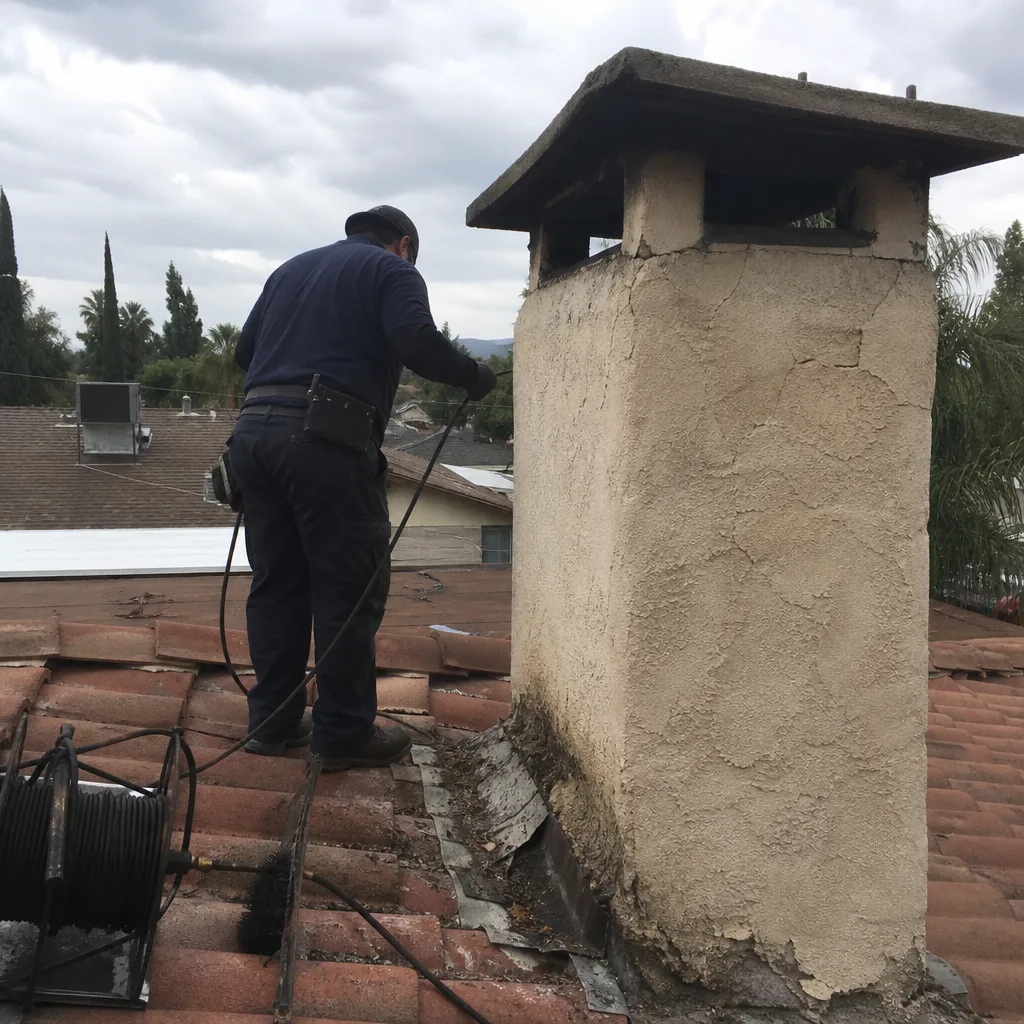 Before
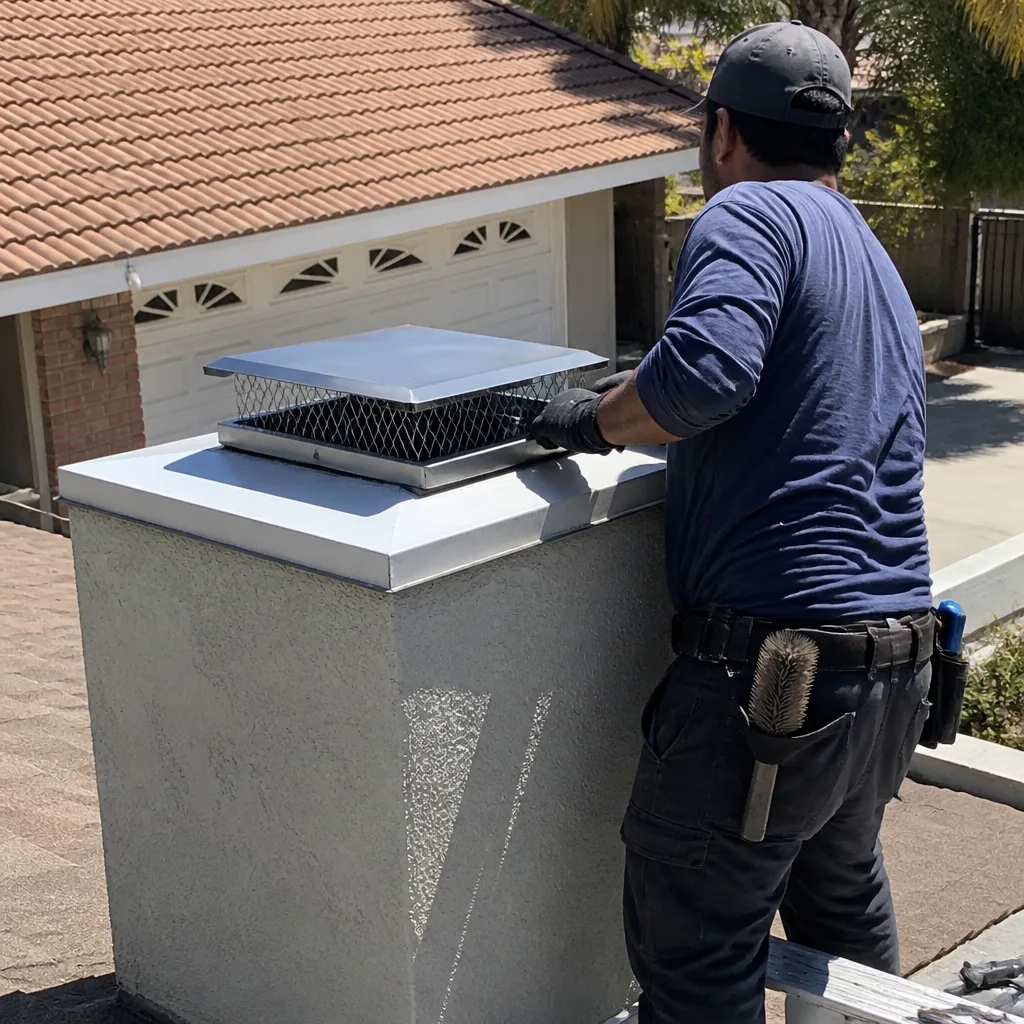 After
 Before
 After
 Before
 After